
MUSCULOSKELETAL DISORDERS AMONG OLD PEOPLE IN HILLY AREA
Md. Sayedur Rahaman Sarder1, Kazi Mazharul Islam2, *Md Monoarul Haque3
1Senior Consultant & Director, Department of Physiotherapy & Rehabilitation, Jalalabad Disabled Rehabilitation Centre and Hospital, Sylhet, 2Associate Professor, Department of Orthopedic Surgery, Bangabandhu Sheikh Mujib Medical University, Dhaka, *3Associate Professor & Head, Department of Public Health, German University Bangladesh
Corresponding author : Md Monoarul Haque, Email : monoarmunna@yahoo.com
ABSTRACT
Senior citizens are increasing in Bangladesh, denoted by the increased life expectancy of the population. So, it is the high time to take necessary and relevant measure for their wellbeing. In order to take any welfare measure, it is required to find out their health status particularly musculoskeletal condition. The study focuses on the musculoskeletal problems among senior ethnic citizen residing in Rangamati district. A cross-sectional comparative study was conducted. The subjects were selected conveniently and conducted among 230 senior citizens living with family or alone. A well designed semi-structured standard questionnaire was used to collect required data from the study subjects. About 80.40% subjects suffered from musculoskeletal problems and 19.60% did not have. Back pain and knee pain was prominent
i.e. 35.70% and 34.60%. Neck pain, shoulder pain, elbow pain and heel pain were seen among 13%, 7.60%, 2.70% and 3.80% respondents. No statistically significant association was found between age group, gender and musculoskeletal problem.
Keywords: Musculoskeletal Disorders, Old People, Hilly Area
INTRODUCTION
Normal ageing is responsible for the finite life-span of the human race. It is important for the medical/health professional treating the elderly to know the difference between changes secondary to normal ageing and changes which occur as a result of disease.1 He also stated that there is ongoing research to increase our knowledge on the ageing process. Age-related physiological decline results in defective homeostasis responsible for the susceptibility of the individual to succumb in minor stresses. Knowledge of physiological decline in the various organs has clinical implications in the interpretation of physiological tests, especially when the
organ systems are stressed, in the need to adjust dosage of drugs given to the elderly and in the understanding of some atypical presentations of illness in the elderly. The proportion of older people will be tripled by the next couple of decades. In addition, the incidence of chronic musculoskeletal (MSK) conditions will also increase among the elderly people. Thus, in order to prepare for future health care demands, the magnitude and impact of MSK conditions from this growing population is needed. Research interest on population aging is a very recent origin and still a lot of research endeavor is needed to address the different issues relating to the same and inter-relation of those issues. There is a lack of information and research on elderly in health sector. There is need for further studies to improve health care of the elderly people. Very little studies have done in hilly area of Bangladesh. Evidence suggests that health policy is announced by the government consisting of about 15 goals and objectives for improving health status of all segments of the population. But no emphasis is given to the hilly elderly ethnic population.
METHODS
A cross-cut study was conducted to identify the state of pattern of musculoskeletal disorders among geriatric population in hilly area. Considering time period and resource availability, cross-sectional analytical study design was most feasible for this study. This was a six-month long study. This study was conducted in Rangamati hilly district. This area was selected for data collection and get adequate sample for this study. Aged above 60 years people residing in old home as well as community irrespective of gender were study population. As no sampling frame is available in the community level, non-probability convenient sampling was used to collect study subjects. Data were collected from senior citizen residing in Rangamati sadar upazila through questionnaire by personal interview. Face to face interview was carried out. Health status was determined by taking history and conducting physical examination. Medical records were checked if available. After administering questionnaire, data were checked for consistency. Individual sheet was checked and cleaned to avoid any error. Data were categorized and coded during entry into the SPSS software. Collected data were analyzed by computer technology SPSS version 22.0. Collected information was presented in the form of tables and graphs. Descriptive statistics and inferential statistics were used.
RESULTS
Figure 1. Prevalence of Musculoskeletal problems
About 80.40% subjects suffered from musculoskeletal problems and 19.60% did not have.
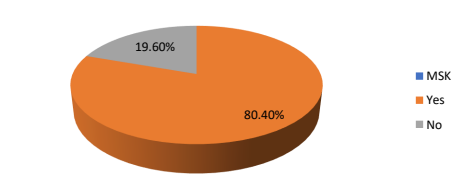
Table 1. Duration of suffering from musculoskeletal problem
More than half of the respondents (65.9%) suffered musculoskeletal problem from less than five years followed by 25.9% from 5-10 years and 8.1% from greater than 10 years.
|
Suffering from musculoskeletal problem in years |
Frequency |
Percentage |
|
Mean±SD |
5.27±3.89 |
|
|
<5 |
122 |
65.9 |
|
5 to 10 |
48 |
25.9 |
|
>10 |
15 |
8.1 |
|
Total |
185 |
100.0 |
Figure 2. Site of musculoskeletal problem
Back pain and knee pain was prominent i.e. 35.70% and 34.60%. Neck pain, shoulder pain, elbow pain and heel pain were seen among 13%, 7.60%, 2.70% and 3.80% respondents.
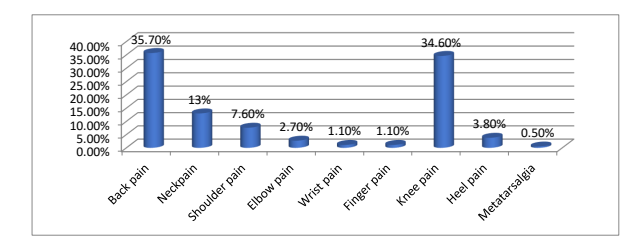
Figure 3. Nature of musculoskeletal pain
About 47% suffered from chronic pain followed by sub-acute 32.40% and acute 20.50%.
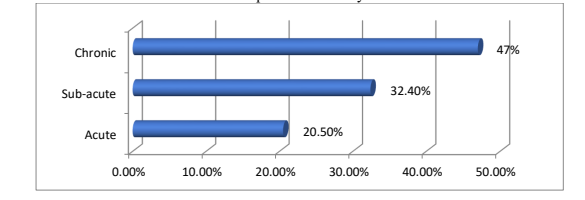
Figure 4. Site of musculoskeletal pain
About 68.60% of study subjects complained localized pain and 28.10% was found referred pain and 3.20% radiated pain.
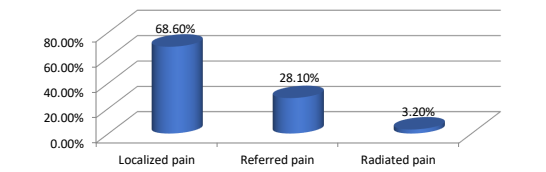
Figure 5. Duration of pain
Intermittent pain was highly prevalent (87%) and 13% was found constant pain.
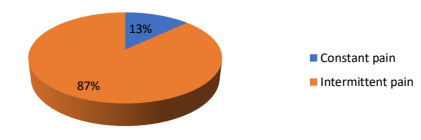
Table 2. Association between age group and musculoskeletal problem
No statistically significant association was found between age group and musculoskeletal problem (p=0.938>0.05).
|
Age group |
MSK |
Total |
χ2 |
p-value |
|
|
Yes |
No |
||||
|
60-70 |
156(67.8) |
37(16.1) |
193(83.9) |
0.128 |
0.938 |
|
71-80 |
25(10.9) |
7(3.0) |
32(13.9) |
||
|
81-90 |
4(1.7) |
1(0.4) |
5(2.2) |
||
|
Total |
185(80.4) |
45(19.6) |
230(100.0) |
||
Table 3. Association between gender and musculoskeletal problem
No statistically significant association was found between gender and musculoskeletal problem (p=0.212>0.05).
|
Gender |
MSK |
Total |
χ2 |
p-value |
|
|
Yes |
No |
||||
|
Male |
96(41.7) |
28(12.2) |
124(53.9) |
1.555 |
0.212 |
|
Female |
89(38.7) |
17(7.4) |
106(46.1) |
||
|
Total |
185(80.4) |
45(19.6) |
230(100.0) |
||
DISCUSSION
Ageing is a burning issue now. Their health status is talkative matter and new challenge for us. Musculoskeletal disorders are common problems affecting the elderly. With age, musculoskeletal tissues show increased bone fragility, loss of cartilage resilience, reduced ligament elasticity, loss of muscular strength, and fat redistribution decreasing the ability of the tissues to carry out their normal functions. The loss of mobility and physical independence resulting from arthropathies and fractures can be particularly devastating in this population, not just physically and psychologically, but also in terms of increased mortality rates. This study was an initiative to explore prevalence of musculoskeletal symptoms among ethnic senior group in Rangamati hilly district of Bangladesh. It is reasonable to equate this practice-based study with the population, because the great majority of people from ethnic minority communities are known to be registered with primary care practices.2 Joint pain lasting for more than one month in the past month were slightly more prevalent among ethnic minorities. The present study found that back pain and knee pain was prominent. Few studies of the prevalence of musculoskeletal symptoms among ethnic minority populations in the UK have been published. Comparison is possible with results from other countries, although methodology and case definitions differ and the focus of some studies has been radiological abnormality rather than symptoms. Bremner et al noted similar prevalence of radiological osteoarthritis between a white British population and one from rural Jamaica, although they
reported that symptoms and incapacity were lower among Jamaicans.3 Gibsonet al found similar levels of joint disease in Pakistan and in white European populations.4 In the USA, levels of self-reported arthritis have been found to vary little by ethnicity5 and musculoskeletal disability was similar in African-American and white populations.6 A telephone study of acute back pain in North Carolina, USA, found a slightly lower prevalence in non-white subjects.7 My results are compatible with these studies in that we have shown only small differences in overall pain prevalence between ethnic minority and white populations. lf-reported pain is likely to have major cultural influences, but it is the symptoms that are presented in clinical consultations and differences in symptomatology which are worthy of note, even if the underlying objective morbidity is similar. Using the Townsend score to represent socioeconomic deprivation has limitations and other socioeconomic factors may contribute to the results. However, despite its limitations, this study presents important evidence of clinically significant differences among ethnic groups. Further research examining other ethnic minority populations in other locations would be valuable. It would also be of great interest to look more closely at the relation between symptoms and objective measures of morbidity, and at the phenomenon of widespread musculoskeletal pain among people from ethnic minority communities. There are several possible explanations for the differences in pain reporting by different ethnic groups. These include pain thresholds and the experience of pain, the effect of change of culture and migration, and mental health issues. Widespread pain might, for example, be an indication of mental distress and, possibly, migration, rather than ethnicity, is a key factor. A review of published reports of these issues has recently been carried out with an emphasis on South Asian subjects.8 The authors of the review call for further work to investigate the extent and nature of musculoskeletal disease among ethnic minorities. The present study has made a contribution to a study of this issue, but further work is needed to assess specific healthcare needs, whether or not the actual needs are for musculoskeletal care, and then to deal with those needs. There was a significant association between education and knee OA. No association was found between gender and OA in the adult population, whereas in the elderly population there was a significant association between female gender and OA.9 The present study showed that no statistical association between age group, gender and musculoskeletal problems. Preventive, curative and rehabilitative measurement can be taken for senior ethnic people as wider prevalence of back pain, neck pain and knee pain. Promoting physiotherapy services specifically designed for elderly people is required bearing in mind of their diverse life style. More depth study with large sample can be conducted to get precise result.
CONCLUSION
Musculoskeletal disorders are among the most common problems affecting the elderly. The resulting loss of mobility and physical independence can be particularly devastating in this population. About 80.40% subjects suffered from musculoskeletal problems. Back pain and knee pain was prominent.
REFERENCES
-
Lee KS, Owen RE, Choo PW, Jayaratnam FJ. The physiology of ageing. Singapore Med J 1991;32(2):159-60.
-
Bremner JM, Lawrence JS, Miall WE. Degenerative joint disease in a Jamaican rural population. Ann Rheum Dis 1968; 27:326-32.
-
Gibson T, Hameed K, Kadir M, Sultana S, Fatima Z, Syed A. Knee pain amongst the poor and affluent in Pakistan. Br J Rheumatol1996; 35:146-9.
-
Jordan JM, Luta G, Renner JB, Dragomir A, Hochberg MC, Fryer JG. Ethnic differences in self-reported functional status in the rural south: The Johnston County osteoarthritis project. Arthritis Care Res 1996; 9:483-91.
-
Carey TS, Evans AT, Hadler NM, Lieberman G, Kalsbeek WD, Jackman AM, et al. Acute severe low back pain. A population-based study of prevalence and care-seeking. Spine 1996; 21:339-4.
-
Njobvu P, Hunt I, Pope D, Macfarlane G. Pain amongst ethnic minority groups of south Asian origin in the United Kingdom: a review. Rheumatology (Oxford) 1999; 38:1184- 7.
-
Escalante A, del Rincon I. Epidemiology and impact of rheumatic disorders in the United States Hispanic population. Curr Opin Rheumatol 2001;13(2):104-10.
-
Zhang W, Doherty M, Peat G, Bierma-Zeinstra MA, Arden NK, Bresnihan B, et al. EULAR evidence-based recommendations for the diagnosis of knee osteoarthritis. Ann Rheum Dis. 2010;69(3):483-9.
-
Bennell K, Hinman R. Exercise as a treatment for osteoarthritis. Current Opinion in Rheumatology 2005; 17:634-40.