
ADVANCEMENTS IN SOLUBILITY OF BCS CLASS II DRUGS: A COMPREHENSIVE REVIEW OF THE MIXED SOLVENCY APPROACH
Author : Abhishek Jaiswal *1, Mangal Singh Panwar 2, Bharat Chouhan 3
Abhishek Jaiswal
Email ID : abhijaiswal814@gmail.comABSTRACT
Poor aqueous solubility is a major challenge in the formulation development of Biopharmaceutics Classification System (BCS) Class II drugs, which exhibit high permeability but low solubility. Various solubility enhancement techniques have been explored to improve the bioavailability of these drugs. The mixed solvency approach, an emerging and promising technique, involves the synergistic use of multiple solubilizers to enhance drug dissolution without relying on conventional organic solvents or surfactants. This review critically analyzes recent advancements in the mixed solvency approach, with a particular focus on the role of urea and xylene sulfonate as effective solubilizing agents. Their mechanism of action, impact on drug stability, and potential for large-scale application are discussed. Additionally, comparative evaluations with other solubility enhancement techniques, including solid dispersions, co-crystallization, and nano-formulations, are presented. The mixed solvency concept offers advantages such as reduced toxicity, environmental sustainability, and cost- effectiveness. However, challenges such as selection criteria for solubilizers, optimization of solubility parameters, and regulatory concerns need to be addressed for broader industrial adoption. This review provides valuable insights into the potential of mixed solvency as a sustainable solubility enhancement strategy for BCS Class II drugs, paving the way for improved drug formulation and therapeutic efficacy.
Keywords: BCS Class II Drugs, Mixed Solvency Approach, Solubility Enhancement, Urea and Xylene sulfonate, Drug Bioavailability
INTRODUCTION
The solubility of a drug plays a crucial role in its therapeutic efficacy, influencing both absorption and bioavailability. Biopharmaceutics Classification System (BCS) Class II drugs are characterized by high permeability but low aqueous solubility, making their formulation and drug delivery challenging. [1, 2]
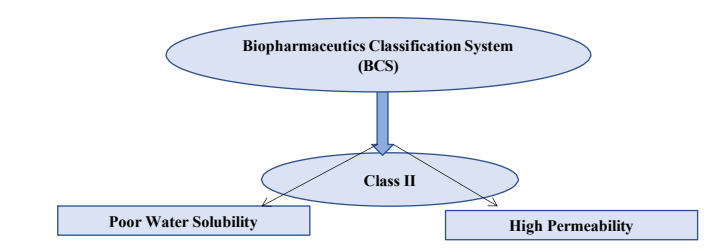
Poor solubility often results in inadequate dissolution rates, leading to suboptimal bioavailability and inconsistent therapeutic effects. Addressing this challenge requires the development of effective solubility enhancement strategies to improve drug dissolution and absorption. [3, 4]
Various conventional approaches, such as salt formation, particle size reduction, and solid dispersion techniques, have been employed to enhance the solubility of poorly soluble drugs. However, these methods often come with limitations such as stability concerns, complex manufacturing processes, and potential toxicity issues.[5] In recent years, the mixed solvency approach has emerged as a promising and innovative technique for solubility enhancement. This method involves the use of multiple solubilizing agents in combination, creating a synergistic effect that significantly increases drug solubility without relying on harmful organic solvents or surfactants.[6]
Among the solubilizing agents explored in the mixed solvency approach, urea and xylene sulfonate have gained attention due to their ability to enhance solubility effectively while maintaining drug stability. Urea, a well-known hydrotropic agent, disrupts intermolecular forces in the drug structure, thereby increasing its solubility. [7, 8] Xylene sulfonate, on the other hand, acts as a co-solvent and stabilizer, further improving dissolution characteristics. The combination of these agents in a mixed solvency system provides an efficient, non-toxic, and cost-effective alternative to conventional solubilization techniques.[9]
This review aims to provide a comprehensive analysis of the advancements in the solubility enhancement of BCS Class II drugs using the mixed solvency approach.[10] It discusses the fundamental principles of mixed solvency, highlights the role of urea and xylene sulfonate, and compares this technique with other solubility enhancement methods.[11] Additionally, potential industrial applications, regulatory considerations, and future research directions are explored.[12] By understanding the advantages and challenges associated with mixed solvency, researchers and pharmaceutical developers can optimize drug formulations for improved bioavailability and therapeutic efficacy (figure 1).
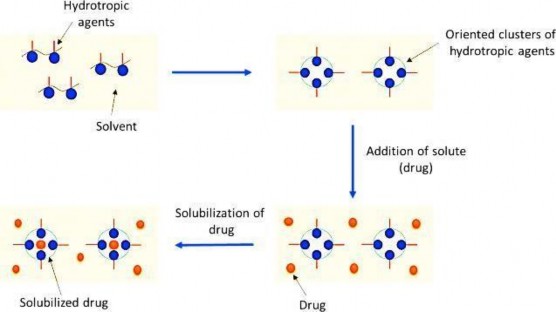
Figure 1: Mixed Solvency Approach [13]
The increasing interest in environmentally sustainable and efficient pharmaceutical formulations underscores the significance of exploring innovative solubility enhancement techniques. As research continues to expand in this field, the mixed solvency approach holds promise for revolutionizing drug solubility enhancement, offering new opportunities for the formulation of poorly soluble BCS Class II drugs.[14]
REVIEW OF LITERATURE
Choudhary et al. (2011): In a foundational study, Choudhary et al. examined the solubility enhancement of BCS class II drugs through co-solvent systems. They focused on the potential of mixed solvency to enhance solubility without resorting to high concentrations of individual solvents. This study laid the groundwork for future research by highlighting the advantages of using multiple solubilizing agents at low concentrations to reduce toxicity and improve drug stability. Although posaconazole was not specifically examined, the study’s conclusions provided a theoretical basis for using a mixed-solvency approach for posaconazole.[15]
Sharma and Jain (2013): Sharma and Jain explored the use of solid dispersion techniques and co-solvent systems for posaconazole, comparing these approaches with traditional solubility- enhancing techniques like salt formation and particle size reduction. They concluded that co- solvent systems offered a more favorable solubility profile for posaconazole, highlighting the importance of solvent interactions in enhancing drug solubility. While the study did not directly investigate mixed solvency, it provided valuable insights into the potential efficacy of solvent combinations.[16]
Patel et al. (2014): Patel and colleagues reviewed the use of urea as a solubilizing agent and stabilizer in pharmaceutical formulations. They identified urea's chaotropic effect, which disrupts hydrogen bonding in water, as a mechanism for enhancing the solubility of hydrophobic drugs. Their work suggested that urea could be a valuable component of a mixed- solvency system for posaconazole, offering a stabilizing effect while increasing solubility. This
study underscored urea's potential as a solubilizer in mixed solvent systems, providing a rationale for its inclusion alongside other solubilizing agents like xylene sulfonate.[17]
Kumar et al. (2015): Kumar et al. investigated the use of surfactants in enhancing the solubility of poorly water-soluble drugs, emphasizing their role in reducing interfacial tension and improving drug wettability. They found that xylene sulfonate, a sulfonated surfactant, effectively enhanced solubility by promoting micelle formation and solubilizing hydrophobic drug molecules. The study suggested that combining surfactants with other solubilizers, such as urea, could result in synergistic effects that improve the solubility and bioavailability of poorly soluble drugs. This finding highlighted the potential of xylene sulfonate as a key component of a mixed-solvency approach for posaconazole.[18]
Bhanushali et al. (2016): Bhanushali and co-researchers presented a comprehensive review of mixed solvency and its applications in enhancing the solubility of poorly soluble drugs. Their study discussed various combinations of solubilizing agents, including urea and sulfonated surfactants, to achieve effective solubility enhancement. They reported that mixed solvency could circumvent the limitations of single-solvent approaches by reducing the concentrations needed for solubilization, thereby minimizing potential toxicities. The authors recommended mixed solvency as an effective and safe approach for drugs like posaconazole, which require high solubility for adequate bioavailability.[19]
Singh et al. (2017): Singh and colleagues conducted a study specifically focused on posaconazole, exploring various solubility enhancement techniques, including solid dispersion, co-crystallization, and the use of co-solvents. While their study did not examine mixed solvency directly, they concluded that posaconazole's solubility could be significantly enhanced using multiple solubilizing agents. Their findings highlighted the need for further research into novel solubilizing systems for posaconazole, providing support for a mixed- solvency approach combining agents like urea and xylene sulfonate.[20]
Desai et al. (2018): Desai et al. explored the role of urea in mixed-solvency systems for enhancing drug solubility, using model compounds with low water solubility. They found that urea, in combination with other solubilizers, demonstrated a synergistic effect on solubility enhancement due to its ability to disrupt water structure and decrease the dielectric constant. They suggested that combining urea with surfactants could improve solubility for BCS class II drugs, offering insights into the potential benefits of a urea-xylene sulfonate system for posaconazole.[21]
Ahmed et al. (2019): Ahmed and colleagues conducted a study on surfactants, specifically focusing on the use of sulfonated surfactants like xylene sulfonate in mixed solvency systems. They demonstrated that these surfactants effectively enhance solubility through micelle formation, which facilitates the dissolution of hydrophobic molecules. They also noted that combining surfactants with hydrotropic agents such as urea could lead to enhanced solubilization without requiring high concentrations of each agent. This research provided a foundation for using a mixed solvency approach that includes xylene sulfonate and urea to enhance posaconazole's solubility.[22]
OVERVIEW OF BCS CLASS II DRUGS
The Biopharmaceutics Classification System (BCS) is widely used in pharmaceutical sciences to categorize drugs based on their solubility and permeability. BCS Class II drugs are defined by their high permeability but low aqueous solubility, which presents a significant challenge in drug formulation and delivery. Since the dissolution rate is often the rate-limiting step in drug absorption, poor solubility can result in low bioavailability, leading to reduced therapeutic efficacy.[23]
Drugs in this category include many widely used pharmaceutical compounds such as ibuprofen, ketoconazole, carbamazepine, and posaconazole. Despite their favorable permeability properties, their limited solubility often requires advanced formulation techniques to ensure effective absorption in the gastrointestinal (GI) tract. The solubility of these drugs can be influenced by factors such as pH, polymorphic form, and the presence of excipients in the formulation. Consequently, researchers have developed numerous solubility enhancement strategies to overcome these limitations and improve drug performance.[24]
SOLUBILITY ENHANCEMENT TECHNIQUES
The need for solubility enhancement in BCS Class II drugs has led to the development of various formulation strategies. These approaches can be broadly categorized into conventional and emerging techniques.
Conventional Approaches
-
Particle Size Reduction: Reducing the particle size of a drug increases its surface area, enhancing dissolution and solubility. Techniques such as micronization and nanonization have been employed to achieve this effect. However, limitations such as poor flow properties and stability issues can arise, requiring additional formulation modifications.
-
Salt Formation: Converting poorly soluble drugs into their salt forms is a commonly used technique to improve solubility. This approach enhances ionization, making the drug more soluble in aqueous media. However, not all drugs have functional groups that can be modified into salt forms, restricting its applicability.
-
Solid Dispersion: Solid dispersions involve dispersing the drug in a hydrophilic carrier matrix, improving its wettability and dissolution rate. While effective, challenges such as drug recrystallization and physical instability can affect formulation performance.
-
Surfactant Use : Surfactants lower interfacial tension and improve drug wetting, thereby enhancing solubility. Common surfactants used include polysorbates and sodium lauryl sulfate. However, concerns regarding toxicity and potential drug- excipient interactions limit their widespread use. [25, 26]
Emerging Techniques
-
Nanotechnology-Based Approaches: Nanocrystals and nanoemulsions have gained significant attention in recent years for their ability to improve drug solubility. These systems enhance dissolution rates through increased surface area and stabilization with surfactants or polymers.
-
Co-Crystallization: Co-crystals are formed by incorporating the drug with a pharmaceutically acceptable co-former, enhancing solubility without altering the drug’s chemical structure. This method is gaining popularity due to its ability to maintain drug stability while significantly improving solubility.
-
Lipid-Based Drug Delivery Systems: Techniques such as self-emulsifying drug delivery systems (SEDDS) utilize lipid carriers to enhance drug solubility and absorption. These formulations create stable microemulsions in the GI tract, improving bioavailability.
-
Mixed Solvency Approach : The mixed solvency approach has emerged as a promising alternative for solubility enhancement. This method involves the combined use of multiple solubilizing agents, eliminating the need for harmful organic solvents and surfactants while effectively improving drug solubility. [27, 28]
MIXED SOLVENCY CONCEPT: AN OVERVIEW
Definition and Principles
The mixed solvency approach is based on the principle that different solubilizers, when used together in appropriate concentrations, can significantly enhance the solubility of poorly soluble drugs. Unlike traditional solubilization methods that rely on a single solubilizer, this technique leverages a synergistic effect between multiple solubilizing agents, improving drug dissolution without requiring excessive amounts of any single agent.
This approach is particularly beneficial for BCS Class II drugs, where solubility is the main barrier to bioavailability. By carefully selecting and optimizing the concentration of various solubilizers, the mixed solvency approach can provide a safer, more efficient alternative to conventional solubility enhancement methods.[29]
Advantages Over Conventional Methods
-
Reduced Toxicity: Unlike conventional methods that use large quantities of surfactants or organic solvents, mixed solvency relies on safer solubilizers, reducing the risk of toxicity and adverse effects.
-
Environmental Sustainability: This approach minimizes the use of harmful solvents, making it a greener alternative for pharmaceutical formulations.
-
Cost-Effectiveness: The technique requires lower quantities of solubilizers, making it a cost-efficient option for large-scale pharmaceutical manufacturing.
-
Enhanced Drug Stability: Mixed solvency prevents drug degradation and recrystallization, maintaining formulation stability and extending shelf life.[30]
ROLE OF UREA AND XYLENESULFONATE IN MIXED SOLVENCY
Mechanism of Solubility Enhancement
Urea and xylenesulfonate are two solubilizing agents commonly used in the mixed solvency approach due to their complementary mechanisms of action.
-
Urea: Urea acts as a hydrotropic agent, disrupting the hydrogen bonding in the drug’s crystalline structure and increasing its aqueous solubility. It also enhances drug wettability, leading to faster dissolution rates.
-
Xylenesulfonate: Xylenesulfonate functions as a co-solvent and surfactant, stabilizing the drug in solution and further improving its solubility. It also prevents drug precipitation, ensuring consistent dissolution throughout the formulation process.
-
By combining these two agents, the mixed solvency approach provides a dual mechanism for enhancing drug solubility, making it an effective strategy for BCS Class II drugs.
Compatibility and Stability Considerations
While the mixed solvency approach using urea and xylenesulfonate offers significant advantages, certain considerations must be addressed to ensure formulation stability and compatibility:
-
Drug-Excipient Compatibility: It is essential to assess potential interactions between the drug and solubilizers to prevent unwanted chemical modifications or degradation.
-
pH Sensitivity: The solubility enhancement effect may vary based on the pH of the formulation, requiring careful optimization of pH conditions.
-
Long-Term Stability: Stability studies should be conducted to evaluate the impact of mixed solvency on the physical and chemical stability of the drug over time.
The solubility enhancement of BCS Class II drugs remains a critical challenge in pharmaceutical formulation. While conventional techniques such as particle size reduction and solid dispersion have been widely used, emerging methods like the mixed solvency approach are gaining attention for their effectiveness, safety, and sustainability. By leveraging multiple solubilizing agents such as urea and xylene sulfonate, this approach enhances drug solubility without the drawbacks of conventional solvents or surfactants.
The mixed solvency technique presents a promising alternative for improving the bioavailability of poorly soluble drugs while minimizing toxicity and formulation complexity. Future research should focus on optimizing solubilizer combinations, understanding long-term stability effects, and exploring industrial-scale applications. With continued advancements in pharmaceutical sciences, the mixed solvency approach has the potential to revolutionize drug formulation, ensuring better therapeutic outcomes for patients.[31]
COMPARATIVE ANALYSIS WITH OTHER SOLUBILIZATION STRATEGIES
Enhancing the solubility of poorly soluble drugs, particularly BCS Class II drugs, is essential for improving their bioavailability and therapeutic efficacy. Over the years, various solubilization strategies have been developed, each with its own advantages and limitations. This section provides a comparative analysis of the mixed solvency approach with other widely used solubilization techniques, including solid dispersions, co-crystallization, nanoformulations, and lipid-based systems.
Solid Dispersions
Solid dispersions involve dispersing a poorly soluble drug in an inert hydrophilic carrier matrix, enhancing its dissolution rate by improving wettability and reducing drug crystallinity. These dispersions can be classified into different types, including eutectic mixtures, amorphous dispersions, and polymer-based dispersions.
Advantages of Solid Dispersions:
-
Increased dissolution rate and bioavailability.
-
Reduced drug particle size, leading to improved surface area.
-
Ability to stabilize the amorphous form of the drug.
Limitations:
-
Drug recrystallization during storage can lead to reduced solubility over time.
-
Manufacturing challenges, such as difficulties in large-scale production.
-
Physical and chemical instability of the formulation.
Comparison with Mixed Solvency Approach:
The mixed solvency approach offers a more stable alternative, as it does not rely on maintaining an amorphous state, which can be difficult to control in solid dispersions. Additionally, mixed solvency eliminates the need for complex processing techniques, making it a simpler and cost- effective strategy.
Co-Crystallization
Co-crystallization involves the formation of a crystalline complex between the drug and a co- former, which enhances solubility without altering the drug’s chemical structure. This approach relies on the formation of non-covalent interactions, such as hydrogen bonding, to improve drug dissolution.
Advantages of Co-Crystallization:
-
Maintains the drug’s chemical identity while enhancing solubility.
-
Offers flexibility in selecting pharmaceutical co-formers for optimization.
-
Can improve physical stability compared to amorphous dispersions.
Limitations:
-
Requires extensive screening to identify suitable co-formers.
-
The stability of co-crystals may be affected by environmental conditions such as humidity.
-
Scalability remains a challenge in industrial applications.
Comparison with Mixed Solvency Approach:
While co-crystallization enhances solubility through structural modifications, the mixed solvency approach offers a more flexible and easily scalable solution without requiring extensive screening of co-formers. Additionally, mixed solvency avoids potential stability issues associated with co-crystal dissociation.
Nanoformulations
Nanoformulation techniques involve reducing drug particles to nanometer sizes, thereby increasing surface area and enhancing dissolution rates. This strategy includes nanocrystals, nanosuspensions, and polymeric nanoparticles.
Advantages of Nanoformulations:
-
-
Significantly increases drug surface area, leading to improved solubility.
-
Can enhance drug permeability and absorption.
-
Suitable for both hydrophilic and hydrophobic drugs.
Limitations:
-
Requires specialized equipment and complex manufacturing processes.
-
Stability issues such as aggregation and Ostwald ripening can occur.
-
High production costs limit widespread adoption.
Comparison with Mixed Solvency Approach:
Unlike nanoformulations, which require high-energy input and expensive equipment, the mixed solvency approach is a low-cost alternative that can be easily implemented in large-scale production. Additionally, it does not suffer from stability issues like particle aggregation, making it a more practical choice for certain formulations.
Lipid-Based Systems
Lipid-based drug delivery systems, such as self-emulsifying drug delivery systems (SEDDS) and liposomes, utilize lipid carriers to solubilize hydrophobic drugs and enhance their absorption in the gastrointestinal tract.
Advantages of Lipid-Based Systems:
-
Enhances solubility and permeability simultaneously.
-
Protects drugs from enzymatic degradation in the GI tract.
-
Can improve drug absorption through lymphatic transport.
Limitations:
-
Limited drug-loading capacity for certain compounds.
-
Stability concerns, such as phase separation and oxidation of lipids.
-
Complex formulation development requiring precise optimization.
Comparison with Mixed Solvency Approach:
While lipid-based systems offer excellent solubility enhancement, their formulation complexity and stability concerns can be limiting. The mixed solvency approach provides a simpler and more stable alternative, eliminating the need for lipid carriers while achieving similar solubility improvements. [32-35]
APPLICATIONS AND INDUSTRIAL PERSPECTIVES
The mixed solvency approach has significant industrial applications, particularly in pharmaceutical formulation development. Its advantages, including safety, cost-effectiveness, and ease of implementation, make it an attractive option for solubility enhancement.
Applications in Drug Formulation
-
Oral Drug Delivery:
-
Improves dissolution and bioavailability of BCS Class II drugs.
-
Reduces variability in drug absorption, leading to consistent therapeutic outcomes.
-
-
Parenteral Formulations:
-
Enhances solubility of poorly water-soluble drugs for injectable solutions.
-
Eliminates the need for toxic organic solvents, improving patient safety.
-
-
Topical and Transdermal Delivery:
-
Increases drug solubility in formulation bases, leading to better skin penetration.
-
Provides enhanced stability and controlled drug release.
-
-
Veterinary Medicine:
-
Used for formulating poorly soluble veterinary drugs for improved bioavailability.
-
Cost-effective method for large-scale veterinary formulations. Industrial Feasibility and Commercialization
The pharmaceutical industry is constantly seeking scalable and cost-effective methods for drug formulation. The mixed solvency approach offers:
-
Easier Regulatory Approval: Since it does not require significant chemical modifications, regulatory hurdles are lower than for novel drug delivery systems.
-
Cost Savings: Eliminates the need for expensive excipients and specialized equipment.
-
Sustainability: Reduces environmental impact by avoiding harmful solvents. Several pharmaceutical companies are exploring mixed solvency in drug development, particularly for reformulating existing drugs with solubility challenges.[36]
-
CHALLENGES AND FUTURE PROSPECTS
Challenges of the Mixed Solvency Approach
Despite its advantages, the mixed solvency approach has certain challenges that need to be addressed:
-
Selection of Solubilizers: Identifying the right combination of solubilizers requires extensive screening and optimization.
-
Potential Drug-Excipient Interactions: Some solubilizers may interact with the drug, affecting stability or therapeutic efficacy.
-
Regulatory Considerations: Although generally safer than organic solvents, regulatory authorities may require extensive data on solubilizer safety and compatibility.
-
Limited Awareness in Industry: Many pharmaceutical companies still rely on traditional solubilization techniques, requiring greater awareness and adoption of mixed solvency.[37]
FUTURE RESEARCH DIRECTIONS
-
Optimization of Solubilizer Combinations: Further research is needed to identify optimal solubilizer ratios for different drugs.
-
Long-Term Stability Studies: Studies should focus on understanding the impact of mixed solvency on drug stability over extended periods.
-
Industrial Scale-Up Strategies: Developing efficient manufacturing processes to implement mixed solvency at an industrial scale.
-
Expansion Beyond Pharmaceuticals: Exploring applications in food, cosmetics, and agrochemicals for enhancing solubility of bioactive compounds.[38]
CONCLUSION
The solubility of BCS Class II drugs remains a critical challenge in pharmaceutical formulation, necessitating the development of effective solubilization techniques. While conventional methods such as solid dispersions, co-crystallization, nanoformulations, and lipid-based systems offer viable solutions, they often come with limitations such as stability concerns, high costs, and manufacturing complexities.
The mixed solvency approach has emerged as a promising alternative, offering enhanced solubility through a synergistic combination of multiple solubilizers. This technique provides several advantages, including safety, cost-effectiveness, environmental sustainability, and ease of industrial application. By leveraging solubilizers like urea and xylenesulfonate, the mixed solvency approach can significantly improve drug dissolution without relying on toxic solvents or surfactants.
Despite its potential, challenges such as solubilizer selection, drug-excipient interactions, and regulatory considerations need to be addressed. Future research should focus on optimizing
solubilizer combinations, conducting stability studies, and exploring large-scale manufacturing strategies to facilitate broader adoption in the pharmaceutical industry.
As pharmaceutical research continues to evolve, the mixed solvency approach holds great promise for revolutionizing drug formulation and improving therapeutic outcomes for poorly soluble drugs. With ongoing advancements, this technique has the potential to become a mainstream solubility enhancement strategy, benefiting both industry and patients worldwide.
REFERENCES
-
Shawahna R, Rahman NU. Evaluation of the use of partition coefficients and molecular surface properties as predictors of drug absorption: a provisional biopharmaceutical classification of the list of national essential medicines of Pakistan. DARU: Journal of Faculty of Pharmacy, Tehran University of Medical Sciences. 2011;19(2):83- 8.
-
Ewa KS, A Pawel M, Monika G, Katarzyna BK. A new computational approach to the classification of fluoroquinolones according to the biopharmaceutical classification system. Current Computer-Aided Drug Design. 2017 Mar 1;13(1):60-74.
-
Boscolo O, Flor S, Salvo L, Dobrecky C, Höcht C, Tripodi V, Moretton M, Lucangioli
S. Formulation and Characterization of Ursodeoxycholic Acid Nanosuspension Based on Bottom-Up Technology and Box–Behnken Design Optimization. Pharmaceutics. 2023 Jul 28;15(8):2037-44.
-
Li C, Li N, Chen X, Li X, Liu C, Abbas A, Wang Y, Qi S, Zhang Y, Li D, Zhang W. Enhancement of dissolution rate and oral bioavailability of poorly soluble drug florfenicol by using solid dispersion and effervescent disintegration technology. Drug Development and Industrial Pharmacy. 2023 Dec 28:1-10.
-
Yu H, Subedi RK, Nepal PR, Kim YG, Choi HK. Enhancement of solubility and dissolution rate of cryptotanshinone, tanshinone I and tanshinone IIA extracted from Salvia miltiorrhiza. Archives of pharmacal research. 2012 Aug;35:1457-64.
-
Shah DA, Murdande SB, Dave RH. A review: pharmaceutical and pharmacokinetic aspect of nanocrystalline suspensions. Journal of pharmaceutical sciences. 2016 Jan 1;105(1):10-24.
-
Sarkar P, Das s, majee sb. Biphasic dissolution model: novel strategy for developing discriminatory in vivo predictive dissolution model for BCS CLASS II DRUGS. 2022.
-
Iqbal B, Ali A, Ali J, Baboota S, Gupta S, Dang S, Muhammad S, K Sahni J. Recent advances and patents in solid dispersion technology. Recent Patents on Drug Delivery & Formulation. 2011 Sep 1;5(3):244-64.
-
Chakraborty R, Afrose N, Kuotsu K. A Potential Breakthrough in the Enhancement of Glimepiride Solubility and Dissolution Rate by Binary and Ternary Solid Dispersion Technique and In Vitro Comparison with Marketed Formulation. Journal of Pharmaceutical Innovation. 2023 Dec;18(4):1981-91.
-
Salman ZN, Al-Ani I, Al Azzam KM, Majeed BJ, Abdallah HH, Negim ES. Enhancement of apixaban's solubility and dissolution rate by inclusion complex (β- cyclodextrin and hydroxypropyl βcyclodextrin) and computational calculation of their inclusion complexes. ADMET and DMPK. 2023 Oct 19;11(4):533-50.
-
Srinivas M, Singh A. Enhancement of Solubility and Dissolution Rate of BCS Class-II Fluvoxamine Tablets using Solvent Evaporation Solid Dispersion Technique. J. Pharm. Res. Int. 2021;12:44-53.
-
Naik D, Bharathi A. Design and evaluation of fast dissolving tablets a novel natural superdisintegrant is used in the development of a BCS class-II drug. Research Journal of Pharmacy and Technology. 2023;16(4):1861-8.
-
Kamble MD, Zaheer Z, Mokale S, Zainuddin R. Development and biopharmaceutical characterization of BCS class II drug–naproxen by two way complexation solid dispersion technique. Int. J. Biol. Pharmaceut. Res. 2019;8(4):2523-30.
-
Talekar S, Dave R. Solubility enhancement of a BCS class II drug using granulated fumed silica as an adsorbent. Journal of Pharmaceutical Research International. 2017 Jan 10;18(6):1-5.
-
Bandela JJ, Anupama CH. Advanced PEGylation for the development of raloxifene hydrochloride, BCS class II drug. Journal of Young Pharmacists. 2009;1(4):306.
-
Sawant GA, Bhagwat GE. Niosomes as An Approach to Improve the Solubility and Bioavailability of BCS Class II Drugs. International Journal of Applied Pharmaceutics. 2021:94-101.
-
Sharma N, Bharkatiya M. Solubility enhancement techniques: A review. International Journal of Pharmaceutical Erudition. 2011 Nov;1(3):40-53.
-
Casian T, Casian A, Gavan A, TOMUȚĂ I. Influence of dissolution conditions on the dissolution rate and release mechanism of ketoprofen from extended release hydrophilic matrix systems. Farmacia. 2022 Mar 1;70(2):18-26.
-
Shahbazian A, Davood A, Dabirsiaghi A. Application of Taguchi method to investigate the effects of process factors on the production of industrial Piroxicam polymorphs and optimization of dissolution rate of powder. Iranian Journal of Pharmaceutical Research: IJPR. 2016;15(2):395-03.
-
Radhi AA, Jaafar IS, Jaafar NS, Faisal SM. Pharmaceutical cocrystal and their role in improving solid state properties of active pharmaceutical ingredients. Al Mustansiriyah Journal of Pharmaceutical Sciences. 2023 May 22;23(2):180-95.
-
Li SP, Feld KM, Kowarski CR. The effect of polymer coating systems on the preparation, tableting, and dissolution properties of sustained-release drug pellets. Drug development and industrial pharmacy. 1997 Jan 1;23(7):623-31.
-
Kumar R, Thakur AK, Chaudhari P, Banerjee N. Particle size reduction techniques of pharmaceutical compounds for the enhancement of their dissolution rate and bioavailability. Journal of Pharmaceutical Innovation. 2022 Jun;17(2):333-52.
-
Martena V, Shegokar R, Di Martino P, Müller RH. Effect of four different size reduction methods on the particle size, solubility enhancement and physical stability of nicergoline nanocrystals. Drug development and industrial pharmacy. 2014 Sep 1;40(9):1199- 205.
-
Kumar S, Singh P. Various techniques for solubility enhancement: An overview. The Pharma Innovation. 2016;5(1, Part A):23-31.
-
Belsarkar AS, Patil RN, Parekar PB, Sul KT, More AV. A Brief Review on Solubility Enhancement Techniques with Drug and Polymer. International Journal of Current Science Research and Review. 2022;5(12):4647-53.
-
Hiendrawan S, Hartanti AW, Veriansyah B, Widjojokusumo ED, Tjandrawinata RR. Solubility enhancement of ketoconazole via salt and cocrystal formation. Int J Pharm Sci. 2015 Jul 1;7(7):160-4.
-
Chivate A, Garkal A, Dhas N, Mehta T. Hot-Melt extrusion: an emerging technique for solubility enhancement of poorly watersoluble drugs. PDA Journal of Pharmaceutical Science and Technology. 2021 Jul 1;75(4):357-73.
-
Li P, Tabibi SE, Yalkowsky SH. Solubilization of flavopiridol by pH control combined with cosolvents, surfactants, or complexants. Journal of pharmaceutical sciences. 1999 Sep;88(9):945-7.
-
Ran Y, Jain A, Yalkowsky SH. Solubilization and preformulation studies on PG- 300995 (an anti-HIV drug). Journal of pharmaceutical sciences. 2005 Feb 1;94(2):297- 303.
-
Ali HA, Omer HK. Research Article Solubility Enhancement of a Poorly Water-Soluble Drug Using Hydrotropy and Mixed Hydrotropy-Based Solid Dispersion Techniques, Vol 10, 2018, page no. 56 – 70.
-
Mankar SD, Rachh PR. Formulation, Development, Evaluation and Solubility Enhancement of Lercanidipine Hydrochloride by Inclusion Complex Method. NVEO- NATURAL VOLATILES & ESSENTIAL OILS Journal| NVEO. 2021 Nov 15:3862- 85.
-
Bejaoui M, Oueslati H, Galai H. Ternary solid dispersion strategy for solubility enhancement of poorly soluble drugs by co-milling technique. Chitin and Chitosan— Physicochemical Properties and Industrial Applications. 2021 Feb 5.
-
Kunam VI, Garikapati DR, Suryadevara VI, Mandava VB, Janga RB, Sunkara SP. Solubility and dissolution rate enhancement of telmisartan by solid dispersion and pelletization techniques using soluplus as carrier. International Journal of Applied Pharmaceutics. 2020;12(1):50-8.
-
Albetawi S, Abdalhafez A, Abu-Zaid A, Matrouk A, Alhourani N. Recent solubility and dissolution enhancement techniques for repaglinide a BCS class II drug: A review. Pharmacia. 2021 Apr 8;68(3):573-83.
-
Semalty A. Cyclodextrin and phospholipid complexation in solubility and dissolution enhancement: a critical and meta-analysis. Expert opinion on drug delivery. 2014 Aug 1;11(8):1255-72.
-
Lankalapalli S, Beeraka NM, Bulusu BT. Studies on oral bioavailability enhancement of Itraconazole salts by complexation with Sulfobutyl7 ether β cyclodextrin. IJRPC. 2018;8(1):131-43.
-
Somaskandan S, Swaminathan R, Muthukuamraswamy KA, Abdul SM. Formulation of olmesartan medoxomil nanoparticulate drug delivery for enhancement of oral bioavailability by ionic-gelation techniques. J Pharm Res. 2014 Aug;8(8):1067-70.
-
Shakeel F, Faisal MS. Nanoemulsion: a promising tool for solubility and dissolution enhancement of celecoxib. Pharmaceutical development and technology. 2010 Feb 1;15(1):53-6.