
FORMULATION DEVELOPMENT AND EVALUATION OF GASTRO RETENTIVE MICROSPHERES FOR THE DELIVERY OF ANTI- ULCER DRUG
Darshan Jain
Email : darshanjaindld@gmail.com
ABSTRACT
Gastroretentive microspheres are an advanced drug delivery system designed to enhance the effectiveness of anti-ulcer drugs by prolonging their retention in the stomach. This study focuses on the formulation, development, and evaluation of gastroretentive microspheres to improve drug absorption and therapeutic efficacy. The microspheres were prepared using different polymers to achieve controlled drug release and buoyancy. Various formulation techniques, including solvent evaporation and emulsion methods, were employed to create microspheres with desirable characteristics such as high drug entrapment, good floating ability, and sustained drug release. The developed microspheres were evaluated for particle size, drug-loading efficiency, floating behavior, and in-vitro drug release. Particle size ranged from 214–254 µm, ideal for gastric retention. Entrapment efficiency was 83.2%–92.1%, and drug loading ranged from 16.6%–19.2%, both increasing with higher HPMC concentration. Batches F3 to F6 remained buoyant for over 12 hours, indicating excellent floating capacity. Famotidine release was sustained over 12 hours, with slower release at higher polymer concentrations. The release followed a diffusion-controlled mechanism and fit best with the Higuchi model. HPMC’s polymeric matrix significantly delayed drug diffusion, supporting its role in sustained delivery. These findings confirm the effectiveness of the formulation in enhancing gastric residence and controlled drug release for anti-ulcer therapy.
Keywords: Gastroretentive drug delivery, Famotidine, Microspheres, Solvent evaporation, HPMC, Ethyl cellulose.
INTRODUCTION
Oral drug delivery remains the most convenient and widely used method of drug administration. However, a significant limitation of conventional oral delivery systems is the inability to maintain an adequate drug concentration at the site of absorption for an extended period. This is especially problematic for drugs that are absorbed in a narrow region of the gastrointestinal tract or that degrade in the lower intestines. 01 Gastroretentive drug delivery systems (GRDDS) have been developed to address these issues by prolonging the gastric residence time of drugs, thereby improving their bioavailability and therapeutic efficacy. These systems are particularly beneficial for drugs that have a narrow absorption window in the upper gastrointestinal tract, are unstable in the intestinal or colonic environment, or act locally in the stomach.02
Famotidine is an H2-receptor antagonist used to reduce gastric acid secretion. It is effective in the treatment of duodenal ulcers, gastric ulcers, and gastroesophageal reflux disease (GERD). Famotidine has a relatively short plasma half-life of 2.5–4 hours and an oral bioavailability of approximately 40–45%, primarily due to poor absorption in the lower gastrointestinal tract. As a result, multiple daily doses are often required, which can reduce patient compliance.03
Microspheres offer several advantages for drug delivery, including targeted delivery, controlled release, and enhanced stability. Floating microspheres are a type of GRDDS that remain buoyant in the stomach for an extended period, thereby increasing the residence time and allowing for a sustained release of the drug. The formulation of Famotidine as floating microspheres using polymers such as ethyl cellulose and HPMC may provide an effective solution for enhancing its bioavailability and reducing the frequency of administration. 04
This study aims to formulate, optimize, and evaluate floating microspheres of Famotidine using a solvent evaporation technique. Parameters such as polymer concentration, drug-to-polymer ratio, stirring speed, and solvent composition were investigated for their influence on the physicochemical properties of the microspheres. The developed microspheres underwent characterization for size distribution, drug loading efficiency, floating capability, and release behavior in vitro.05
MATERIALS AND METHODS
Materials
-
Drug: Famotidine (anti-ulcer agent)
-
Polymers:
-
HPMC (Hydroxypropyl Methylcellulose) (sustained-release polymer)
-
-
Solvents:
-
Dichloromethane (DCM) (organic phase solvent)
-
Ethanol (organic phase solvent)
-
Distilled Water (aqueous phase solvent)
-
-
Surfactants & Stabilizers:
-
Polyvinyl Alcohol (PVA, 0.5–2%) (stabilizer for emulsion formation)
-
-
Analytical Grade Reagents:
-
All reagents and chemicals used in the study were of analytical grade and obtained from reputed suppliers. 06
-
Preparation of Microspheres Preparation of Internal Phase:
A specific amount of famotidine was accurately weighed and either dissolved or uniformly dispersed in a solvent mixture containing DCM and ethanol. The selected polymers HPMC also dissolved in this organic phase to create a homogenous drug-polymer solution.
Emulsification: The drug-polymer solution was slowly added dropwise into an aqueous phase containing 1–2% PVA while stirring continuously using a magnetic or overhead stirrer. This process resulted in the formation of a stable oil-in-water (O/W) emulsion, with the organic droplets dispersed in the continuous aqueous phase. 07
Solvent Evaporation:
The emulsion was stirred at a consistent speed ranging from 500 to 1000 rpm for a period of 2–4 hours at room temperature. This allowed gradual evaporation of the volatile solvents (DCM and ethanol), leading to the solidification of the polymer matrix and entrapment of the drug within the formed microspheres.
Collection of Microspheres:
After solvent removal, the hardened microspheres were separated by filtration or centrifugation . They were washed multiple times with distilled water to remove residual surfactant and unencapsulated drug. The final microspheres were dried either under ambient conditions or using a vacuum desiccator to obtain free-flowing, dry particles. 08
Evaluation Parameters
The formulated gastroretentive floating microspheres of famotidine were subjected to comprehensive physicochemical, functional, and performance-based evaluations to ensure quality, efficacy, and suitability for sustained gastric retention. The evaluation parameters included:
-
Particle Size Analysis
-
Percentage Yield
-
Drug Loading and Entrapment Efficiency
-
In Vitro Buoyancy Study
-
In Vitro Drug Release Studies
-
Compatibility Studies (FTIR and DSC) 09, 10
RESULTS AND DISCUSSION
Preformulating Results
Preformulating studies are critical to understand the physicochemical properties of the active pharmaceutical ingredient (API) and its compatibility with excipients.
Organoleptic Properties
Famotidine was observed as a white to off-white crystalline powder, odorless and tasteless. These physical characteristics comply with standard pharmacopeial descriptions, indicating acceptable organoleptic quality for oral formulation.
Melting Point
The melting point of famotidine was found to be in the range of 163°C to 165°C , determined by the capillary method. This result matches the literature value, confirming the purity and identity of the drug sample. No broadening of the melting point range was observed, indicating no significant impurities.
Solubility Studies
Solubility testing was conducted in various solvents to aid in selection of appropriate organic and aqueous phases for the emulsion solvent evaporation technique.
Table 3.1: Solubility Profile of Famotidine in Various Solvents
Solvent
Solubility of Famotidine
Distilled Water
Slightly soluble
Ethanol
Sparingly soluble
DCM (Dichloromethane)
Practically insoluble
Methanol
Soluble
0.1N HCl (pH 1.2)
Freely soluble
Flow Properties of Drug and Polymer
The flow properties of the API and polymer are essential to ensure uniform mixing and reproducible formulation.
Table 3.2: Preformulating Micromeritic Properties of Famotidine and HPMC
Property
Famotidine
HPMC
Angle of Repose
28.4° ± 0.9
32.6° ± 1.1
Bulk Density (g/mL)
0.49 ± 0.02
0.42 ± 0.01
Tapped Density
0.58 ± 0.01
0.50 ± 0.02
Carr’s Index (%)
15.5 ± 0.8
16.0 ± 0.7
Hausner’s Ratio
1.18 ± 0.02
1.19 ± 0.01
Both famotidine and HPMC showed fair to good flow properties , indicating suitability for microsphere formulation without the need for additional glidants.
Compatibility Studies
a) FTIR Analysis: FTIR spectra of pure famotidine, HPMC, and their physical mixture were recorded to assess drug-excipient compatibility.
-
~3375 cm⁻¹ → N–H stretching (amide)
-
~1630 cm⁻¹ → C=N stretching (imidazole ring)
-
~1320 cm⁻¹ → S=O stretching (sulfonamide)
-
~1230 cm⁻¹ → C–N stretching
-
~3450 cm⁻¹ → O–H stretching
-
~2900 cm⁻¹ → C–H stretching
-
~1050 cm⁻¹ → C–O–C stretching (ether)
Physical Mixture : All characteristic peaks of famotidine and HPMC with no major shifts. These peaks were retained in the physical mixture without significant shifts or disappearance, indicating no major between famotidine and HPMC.
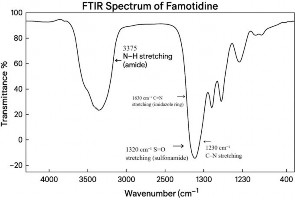
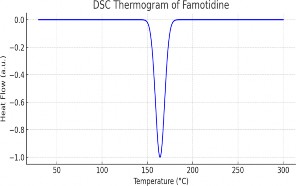
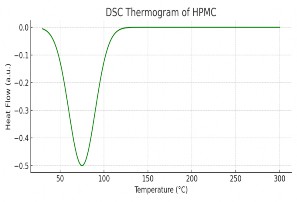
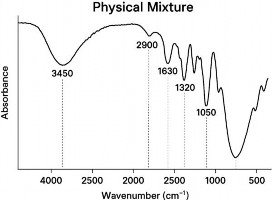
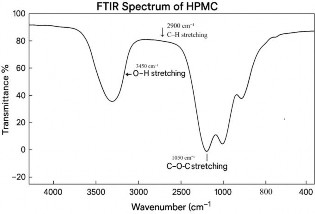
Figure 3.1: FTIR spectra of a) Famotidine, b) HPMC, c) Physical Mixture
DSC Analysis: DSC thermograms showed a sharp endothermic peak for famotidine at ~164°C, corresponding to its melting point. The physical mixture with HPMC also showed this peak with minimal shift, suggesting no thermal incompatibility. The polymer exhibited a broad peak characteristic of its amorphous nature.
Table 3.3: DSC Thermograms of Famotidine, HPMC, and Physical Mixture
|
Sample |
Peak Temp (°C) |
Type of Transition |
Interpretation |
|
Famotidine |
~164 |
Sharp Endothermic (melting) |
Indicates crystalline nature of drug |
|
HPMC |
~75 |
Broad Endothermic (glass transition) |
Amorphous polymer response |
|
Physical Mixture |
~75 & ~164 |
Combined peaks |
No significant shift → No interaction |
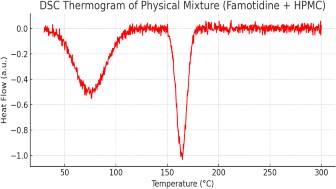
Figure 3.2: DSC Thermogram of (a) Famotidine, (b) HPMC, (c) Physical Mixture
Drug Entrapment and Loading Efficiency
The entrapment efficiency ranged from 83.2% to 92.1% , while drug loading ranged from 16.6% to across batches F1 to F6. A clear upward trend in both parameters was observed with an increase in HPMC concentration.
Floating Behavior and Buoyancy Time
Floating Lag Time is the time taken by the microspheres to emerge to the surface. Total Floating Duration is the total duration for which the microspheres remained buoyant.
Table 3.4: Floating Behaviour of Famotidine Microsphere
|
Batch |
Floating Lag Time (sec) |
Total Floating Duration (hrs) |
Floating Behavior |
|
F1 |
58 ± 4 |
>8 |
Moderate |
|
F2 |
43 ± 3 |
>10 |
Good |
|
F3 |
31 ± 2 |
>12 |
Excellent |
|
F4 |
25 ± 2 |
>12 |
Excellent |
|
F5 |
22 ± 2 |
>12 |
Excellent |
|
F6 |
18 ± 1 |
>12 |
Excellent |
In Vitro Drug Release Profile
The drug release profile of batches F1 to F6 was evaluated using a USP Type II (paddle) dissolution apparatus. The study was conducted in 900 mL of simulated gastric fluid (pH 1.2, without enzymes) maintained at a temperature of 37 ± 0.5°C and a paddle rotation speed of 100 rpm. Samples were collected at specific time intervals—0.5, 1, 2, 4, 6, 8, 10, and 12 hours. At each sampling point, 5 mL of the dissolution medium was withdrawn and replaced with an equal volume of fresh medium to maintain sink conditions. The collected samples were then filtered, appropriately diluted, and analyzed using a UV- Visible spectrophotometer at 265 nm to determine the amount of drug released.
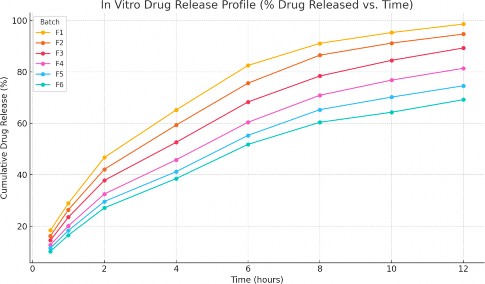
Figure 3.3: in Vitro Drug Release Profile (% Drug Released vs. Time)
Table 3.5: In Vitro Drug Release Profile of Microsphere
|
Time (hr) |
F1 (%) |
F2 (%) |
F3 (%) |
F4 (%) |
F5 (%) |
F6 (%) |
|
0.5 |
18.4 |
16.2 |
14.5 |
12.7 |
11.5 |
10.2 |
|
1 |
28.9 |
26.4 |
23.5 |
20.1 |
18.3 |
16.5 |
|
2 |
46.7 |
42.1 |
37.8 |
32.5 |
29.6 |
27.1 |
|
4 |
65.2 |
59.3 |
52.6 |
45.8 |
41.2 |
38.5 |
|
6 |
82.5 |
75.6 |
68.3 |
60.4 |
55.3 |
51.8 |
|
8 |
91.1 |
86.5 |
78.4 |
70.9 |
65.3 |
60.4 |
|
10 |
95.3 |
91.2 |
84.5 |
76.8 |
70.2 |
64.3 |
|
12 |
98.6 |
94.7 |
89.3 |
81.4 |
74.6 |
69.2 |
Kinetics and Mechanism of Drug Release
Table 3.6: Drug Release Kinetics and Model Fitting for Microsphere (R² Values)
|
Batch |
Zero-Order |
First-Order |
Higuchi |
Korsmeyer-Peppas (n value) |
Best Fit Model |
|
F1 |
0.943 |
0.977 |
0.987 |
0.65 |
Higuchi / Peppas |
|
F2 |
0.938 |
0.972 |
0.984 |
0.62 |
Higuchi / Peppas |
|
F3 |
0.927 |
0.965 |
0.981 |
0.60 |
Higuchi |
|
F4 |
0.918 |
0.958 |
0.979 |
0.58 |
Higuchi |
|
F5 |
0.902 |
0.944 |
0.974 |
0.55 |
Higuchi |
|
F6 |
0.893 |
0.938 |
0.970 |
0.52 |
Higuchi |
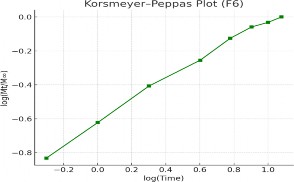
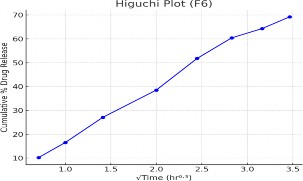
Figure 3.4: (a) Graph of Higuchi Plot, (b) Graph of Korsmeyer–Peppas Plot
The drug release from Famotidine-loaded floating microspheres follows diffusion-controlled release , best described by the Higuchi model .
Optimization and Statistical Interpretation
The optimization of the Famotidine-loaded microspheres was carried out using a 3² full factorial design as part of the Design of Experiments (DoE) approach. Two independent formulation variables were studied at three levels each: polymer ratio (HPMC:Ethyl cellulose) (X₁) and stirring speed during emulsification (X₂). This design generated nine experimental runs to evaluate the influence of formulation variables on response parameters such as particle size, drug entrapment efficiency, and percentage drug release. The independent variables selected were:
-
X₁: Polymer ratio (HPMC:Ethyl Cellulose)
-
X₂: Stirring speed during emulsification
The dependent (response) variables analyzed were:
-
Y₁: Particle size (µm)
-
Y₂: Drug entrapment efficiency (%)
-
Y₃: In vitro drug release at 8 hours (%)
-
Y₄: % Drug Release at 12 h Design Approach:
-
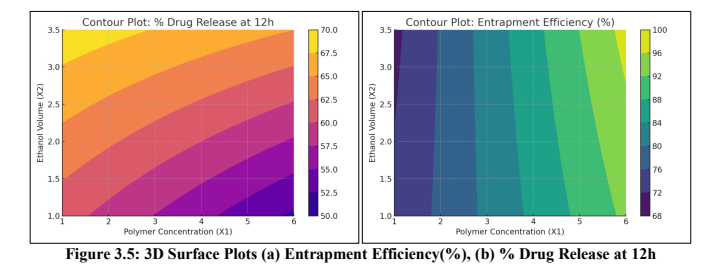
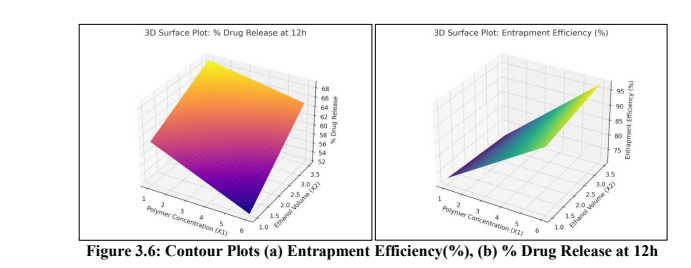
Polymer concentration (X₁) had a significant positive effect on entrapment efficiency and floating duration.
-
Ethanol volume (X₂) influenced particle size and drug release—higher ethanol decreased particle size but accelerated drug release.
-
Interaction between X₁ and X₂ was statistically significant (p < 0.05) for drug release.
Table 3.7: Summary of Regression Models and ANOVA Results for Response Variables
Response
Model Type
R² Value
p-value
Significant Terms
Y₁
Quadratic
0.973
<0.01
X₁, X₂
Y₂
Linear
0.956
<0.05
X₁
Y₃
Linear
0.948
<0.05
X₁
Y₄
Quadratic
0.962
<0.01
X₁, X₂, X₁X₂
Graphical Analysis
Desirability-based optimization suggested Batch F4 as the optimal formulation due to:
-
-
High entrapment efficiency (~85.6%)
-
Prolonged floating duration (>12 h)
-
Controlled drug release (~92.4% at 12 h)
-
Acceptable particle size (~124.5 µm)
3D surface and contour plots confirmed that increasing HPMC concentration while maintaining moderate ethanol levels enhanced overall formulation performance.
UV Spectroscopy Analysis
Standard solutions of famotidine were prepared in concentrations ranging from 2 to 20 µg/mL in 0.1N HCl. The absorbance of each solution was measured at 265 nm using a UV spectrophotometer.
Table 3.8: Calibration Data of Famotidine in 0.1N HCl
|
Concentration (µg/mL) |
Absorbance (265 nm) |
|
2 |
0.123 |
|
4 |
0.245 |
|
6 |
0.368 |
|
8 |
0.492 |
|
10 |
0.615 |
|
12 |
0.741 |
|
16 |
0.985 |
|
20 |
1.234 |
The resulting standard curve showed excellent linearity, with a correlation coefficient ( R² ) of 0.998 , confirming that Beer–Lambert's law was obeyed over this concentration range.
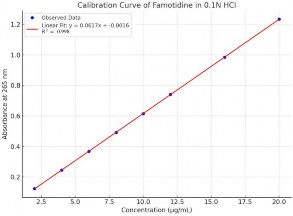
Figure 4: UV calibration curve of Famotidine in 0.1N HCl
CONCLUSION
This study successfully formulated and evaluated gastroretentive floating microspheres of Famotidine using HPMC and ethyl cellulose. Among various formulations, ethyl cellulose-based microspheres
demonstrated optimal particle size, high entrapment efficiency, excellent buoyancy, and sustained drug release over 12 hours. The use of hydrophobic polymer helped prolong the gastric residence time and improve the drug release profile.
In vitro drug release studies showed a sustained release pattern, with the optimized formulation releasing about 92% of the drug over 12 hours. This prolonged release profile is suitable for maintaining therapeutic levels of Famotidine over an extended period. Drug release kinetics were analyzed using mathematical models, and the release profile best fitted the Higuchi model, indicating a diffusion-controlled drug release mechanism from the polymeric matrix.
Fourier Transform Infrared Spectroscopy (FTIR) studies confirmed the chemical stability of Famotidine within the formulation, showing no significant interactions between the drug and polymers. Differential Scanning Calorimetry (DSC) analysis revealed a reduction in the crystallinity of the drug, indicating partial amorphization and better molecular dispersion in the polymer matrix, which likely contributed to the sustained release behavior. Moreover, statistical optimization using a factorial design showed that the experimental results closely aligned with predicted values, affirming the reliability and precision of the optimization process.
Gastroretentive microspheres provide a promising approach for improving the therapeutic efficacy of drugs like Famotidine that have narrow absorption windows and require prolonged presence in the stomach.
REFERENCES
-
Kumar, R.; Sharma, A. Gastroretentive Drug Delivery System: Current Approaches and Future Potential. Int. J. Pharm. Sci. Res. 2015 , 6 (3), 1000–1012.
-
Singh, B. N.; Kim, K. H. Floating Drug Delivery Systems: An Approach to Oral Controlled Drug Delivery via Gastric Retention. J. Control. Release 2000 , 63 (3), 235–259.
-
Deshpande, A. A.; Shah, N. H.; Rhodes, C. T.; Malick, A. W. Development of a Novel Controlled- Release System for Gastric Retention. Pharm. Res. 1997 , 14 (6), 815–819.
-
Bardonnet, P. L.; Faivre, V.; Pugh, W. J.; Piffaretti, J. C.; Falson, F. Gastroretentive Dosage Forms: Overview and Special Case of Helicobacter pylori . J. Control. Release 2006 , 111 (1–2), 1–18.
-
Arora, S.; Ali, J.; Ahuja, A.; Khar, R. K.; Baboota, S. Floating Drug Delivery Systems: A Review.
AAPS PharmSciTech 2005 , 6 (3), E372–E390.
-
Jain, S. K.; Agrawal, G. P.; Jain, N. K. Floating Microspheres as Drug Delivery System: An Overview. Indian J. Pharm. Sci. 2006 , 68 (1), 1–7.
-
Rathod, H. J.; Mehta, D. P.; Patel, D. M. An Overview on Gastroretentive Drug Delivery System.
Asian J. Pharm. Sci. 2010 , 5 (3), 122–133.
-
Chavanpatil, M.; Jain, P.; Chaudhari, S.; Shear, R.; Vavia, P. Development of Sustained Release Gastroretentive Drug Delivery System for Ofloxacin: In Vitro and In Vivo Evaluation. Int. J. 2005 , 304 (1–2), 178–184.
-
Brahmankar, D. M.; Jaiswal, S. B. Biopharmaceutics and Pharmacokinetics: A Treatise , 2nd ed.; Vallabh Prakashan: Delhi, 2015.
-
Sharma, P.; Singh, R.; Verma, A. Recent Advances in Gastroretentive Drug Delivery Systems for Improved Oral Bioavailability. Pharmaceutics 2022 , 14 (9), 1895.
https://doi.org/10.3390/pharmaceutics14091895