
EVALUATION OF ANTIDIABETIC ACTIVITYOF SALVIA PLANT USING ALPHA AMYLASE INHIBITORY ACTIVITY
Sarah Gadavala1, Sheetal Buddhadev2*, Joshua Anthony Vomo3, Pratik Vediya4, Vasanthi A. V5, Medha Gayatri Bhatiprollu6
1Assistant Professor, Faculty of Pharmacy, Noble University, Junagadh, Gujarat, India,
2Professor, Faculty of Pharmacy, Noble University, Junagadh, Gujarat, India,
3Research Scholar, Department of Pharmacology, Raghavendra Institute of Pharmaceutical Education and Research, Andhra Pradesh, India,
4Assistant Professor, School of Pharmacy, RK University, Rajkot, Gujarat, India,
5,6Research Scholar, Department of Pharmacy, Sarojini Naidu Vanita Pharmacy Maha Vidyalaya, Secunderabad, Telangana, India
Corresponding author: Dr. Sheetal Buddhadev
Email ID: sheetal.buddhadev@ngivbt.edu.in ORCID: https:0000-0002-4864-4302
ABSTRACT
The objective of this study was to evaluate the alpha-amylase inhibitory activity of the methanol extract of Salvia nemorosa against porcine pancreatic amylase in vitro. The plant, sourced from a city in Bihar, was extracted using methanol through maceration for 48 hours. Different concentrations (5, 10, 25, and 50 μg/ml) of the methanol extract were prepared and subjected to alpha-amylase inhibitory assay using starch azure with 0.5 M Tris-HCl buffer and
0.01 M CaCl₂ as the substrate. The methanol extract showed significant alpha-amylase inhibitory activity, with an IC₅₀ value of 4.4 μg/ml. The inhibition increased with dose, and when compared with acarbose, a standard drug for the treatment of diabetes, Salvia nemorosa exhibited greater inhibitory potential. These findings suggest that Salvia nemorosa could be a promising candidate for diabetes management; however, further in vivo studies and clinical trials are needed to confirm its therapeutic potential.
Keywords: Salvia nemorosa, Antidiabetic, Alpha amylase, in vitro study, herbal extract.
-
INTRODUCTION
-
Diabetes Background
Diabetes mellitus (DM)is a type of metabolic disease characterized by persistently high blood sugar levels. Epidemic levels of diabetes mellitus have been reached globally. As of 2023, India had the second-highest number of people living with diabetes mellitus (77 million), making it one of the epicenters of the global epidemic 1, 2. Diabetes is a disease that has been known since antiquity, with Egyptian manuscripts dating back to 1500 B.C. Indian physicians called it madhumeha ('honey urine') and Charaka and Sushruta identified two types, later to be named Type I and Type II diabetes. Aretaeus the Cappadocian coined the word diabetes (Greek, ‘siphon’) and A vicenna (980-1037A.D.) referred to abnormal appetite and observed diabetic gangrene, and concocted a mixture of seeds as a panacea. The term mellitus (Latin, 'sweet like honey') was coined by John Rollo in 1798 to distinguish this diabetes from other diabetes (insipidus) in which the urine was tasteless 3.
Table 1. The main types of DM 1.
Type of Diabetes mellitus
Description
Type I diabetes
As a result of β-cell destruction which customarily provokes complete insulin insufficiency.
Type II diabetes
In this type, the body is capable of producing insulin but becomes so resistant that the insulin is ineffective.
Gestational diabetes mellitus GDM)
This is a type of DM determined in the second or third trimester of pregnancy that is not clearly overt diabetes. GDM is a provisional disorder that happens in pregnancy and brings enduring danger of type II diabetes 2.
The three main types of DM are known type I associated with full insulin deficiency, type II- progressive insulin deficiency 1,5and gestational DM which is diagnosed in 2nd or 3rd semester of pregnancy 1.
-
Epidemiology
Type II diabetes is the most common, affecting approximately 90-95% of people. Diabetes affects nearly 422 million people in 2014, up from 108 million in 1980. The global prevalence among adults increased from 4.7% in 1980 to 8.5% in 2014. According to 2016 estimates, diabetes was directly responsible for 1.6 million deaths. Between 2000 and 2016, there was a 5% increase in diabetes-related premature mortality2. India is one of the epicenters of the global diabetes mellitus epidemic, with the world's second-highest number of diabetics. It was estimated that 62 million people had diabetes mellitus and 77 million had prediabetes (low glucose tolerance and fasting). Of course, these figures are not static, and the 2015 update of the Atlas predicts that 69.2 million people in India will have diabetes mellitus 2.
-
Pathophysiology: 1,4,5
Type 2 diabetic individuals are characterized by:
Impaired insulin secretion
For the disease to progress, pancreatic beta-cell dysfunction must occur, and marked hyperglycemia appears only when this dysfunction becomes severe. Beta-cell death can result from T-cell-mediated cytotoxicity or apoptosis. Fasting insulin levels drop sharply once fasting plasma glucose exceeds 140 mg/dl, as beta cells can no longer sustain high insulin secretion. In autoimmune conditions, pancreatic cells are destroyed when they act as autoantigens, triggering CD4+ T lymphocyte activation and subsequent immune-mediated damage.
Insulin resistance involving muscle, liver and the adipocyte
Muscle
Insulin facilitates amino acid entry and converts them into proteins and inhibits protein breakdown in muscle. Insulin deficiency leads to protein breakdown, hence amino acids are released in blood and taken up by the liver and converted to pyruvate, glucose, and urea.
Adipose tissue
Lipolytic hormones such as glucagon, adrenaline, thyroxin, and others breakdown an increased amount of fat in diabetes. The blood contains more free fatty acids and glycerol, which the liver uses to produce acetyl-CoA. Normally, acetyl-CoA is converted to fatty acids and triglycerides, but in diabetics, acetyl-CoA is diverted to the production of ketone bodies (acetone, acetoacetate, and hydroxyl-butyrate). Ketone bodies are released into the bloodstream, resulting in ketonemia and ketonuria. Increased free fatty acid levels in the presence of decreased insulin secretion may impair islet cell function.
Liver
In type 2 diabetes, the liver exhibits insulin resistance; even in cases of hyperinsulinemia in the early stages of the disease, gluconeogenesis in the liver is not suppressed. This causes hyperglycemia by increasing hepatic glucose synthesis. In insulin, Proteins and amino acids move from peripheral tissues to the liver, where they are converted to carbohydrate and urea. Thus, in diabetes there is an excess of glucose hyperglycemia and glycosuria pharmacotherapy
4,5.
Table 2. Classification of the drugs used in management of Diabetes
Classification
Drugs
Insulin
Insulin
Sulphonyl urea (KATP) channel blocker)
First generation: Tolbutamide Second
generation: Glibenclamide, Gliclazide, Glimepiride
Meglitinide/Phenylephrine analogue
Repaglinide, Nateglinide
Glucagon-like peptide-1 (GLP-1) receptor
agonist
Exenatide, Liraglutide
Dipeptidylpeptidase-4(DPP-4) inhibitors
Sitagliptine, Vildagliptine, Sexagliptine,
Alogliptin, Linagliptin
Biguanide (AMPK activator)
Metformin
Thiazolidinediones (PPARγ activator)
Pioglitazone
α-Glucosidase inhibitor
Acarbose, Miglitol, Voglibose
Amylin analogue
Pramlintide
Dopamine-D2receptoragonist
Bromocriptine
Sodium-glucosecotransporter-2(SGLT-2)
inhibitor
Dapagliflozin
Table 3. Plant profile of Salvia nemorosa
Kingdom
Plantae
Phylum
Tracheophyta
Class
Mgnoliopsia
Order
Lamiales
Family
Lamiaceae
Genus
Salvia nemorosa L.
Binomial name
Salvia nemorosa
Common Name
Wood lands age, Balkan clary, blue sage or wild sage
Geographical sources
Central Europe and Western Asia.
Salvia nemorosa is a perennial plant with a stem length of 50-80cm, is green, rigid, and thick, and has short-spread glandular trichomes. Lower leaves are 1.5-2 cm long, upper leaves are sessile, 3-9 cm long and 1-4 cm broad, green, ovate to practically bay one twice, at the base of the heart, on canes distributed, coated with soft short glandular and non-glandular trichomes, Denselow-density, white dorsal surface, and cracked.6,7 Green, non-sharp, crenate inflorescence leaf with a pistil Compressed cycle of the inflorescence flower number 6-10 blooms. Low-branching, deep purple, Oval, short, Rostral, trichomes in front and behind, purple-purple. Calyx length at fruiting time is 8 minutes and 6 mm at the time of blooming, with 11 lanes, the tubular-shaped Bluebell has long, unbranched trichomes that are not glandular. Sclerotic upper lobe, Purplish-violet, 10.8 mm long corolla tubes, Fruit nutlet is ovate, 1.93 mm long, and 1.39 mm wide. It has no trichomes ring.
-
Microscopy study of Salvia nemorosa
Petiole anatomy: generally crescent-shaped, an elliptical layer of the epidermis containing 4 to 6 distinct layers of collenchyma’s as well as 7 to 12 layers at the top. Sclerid parenchyma, a five-bundle sheath, and a double-bundle bundle on either side of the centre.1 to 4 cell, glandular and non-glandular trichomes. Stem anatomy: typical square form, after the cuticle layer comes the circular epidermis. In the corners, 6–8-layer collenchyma’s tissue was seen. 5 rows of skin parenchyma tissue are inserted, followed by 10 layers of sclerenchyma tissue and then 3 layers of phloem. 40–50-layer pith parenchyma cells are bigger in the middle, where six regular polygons may be seen 7,8.
-
Phytochemistry of Salvia nemorosa
The phytochemical screening of the Salvia nemorosa (family Lamiaceae) shows the presence of the active chemical constituents, the flowers contain sabinene, germacrene D, β- caryophyllene and caryophyllene oxide α-Thujene and γ- terpinene while β -pinene, α - terpinene, limonene, and p-cymene were minor chemicals, further significant monoterpenes. The leaf contains in the sesquiterpenes β-caryophyllene, germacrene D and caryophyllene oxide. ). Leaf also includes some sabinene, additional monoterpenes in amounts less than 1%, and sesquiterpenes in amounts less than 2%, including farnesene, α -humulene, γ -murolene, and δ -cadinene. Hexadecenoic acid is the main compound in the stem volatile fractions. The already mentioned sesquiterpenes βcaryophyllene and germacrene D were also major compounds in the stems 9–11.
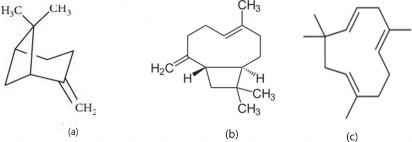
Figure 1. Chemical structure of (a) β-pinene (b) β—caryophyllene and (c) α-humulene
β- Pinene is a monoterpene that is present in essential oils as the enantiomers (+)-β-pinene and (−)-β-pinene. It is known that some terpenes have the ability to maintain β cell performance and to decrease plasma hyper glycaemia, in addition to other biological effects. Such outcomes are especially beneficial for the treatment of diabetes mellitus (DM), a complicated illness that involves interplay between hereditary and environmental variables 12. β --caryophyllene is a CB2 receptor agonist shown to have insulinotropic activity. β --caryophyllene possess insulinotropic and β cell regeneration activities, respectively 13. This study demonstrates that α-humulene compounds sesquiterpene derivatives have anti-diabetic effect in Wistar rats by lowering 8- OHdG levels and preventing oxidative stress caused by free radical production 14. The anti-hyperglycemic effect of Salvia nemorosa is demonstrated by Dinparast et al. 2016 using a-Glucosidase inhibition activity of aerial parts of the plant 15.
-
Pharmacological Activity of Salvia nemorosa
Anti diabetic activity
The anti-hyperglycemic effect of Salvia nemorosa is demonstrated by Dinparast et al., 2016 using a-Glucosidase inhibition activity of aerial parts of the plant. Alpha-Glucosidase inhibitor drugs reduce the glucose level of blood as a strategy for treatment of type 2 diabetes. In this study, methanolic extract showed the strongest a-glucosidase inhibitory activity (IC50 19 mg/mL) 15.
Anti-microbial activity
In this study, the effects of Salvia nemorosa oils and extracts were evaluated against a panel of four bacteria and two fungi, revealing that Gram-positive bacteria were more sensitive; minimum inhibitory concentrations (MICs) and inhibition zone diameters were determined, with leaf essential oil showing the strongest activity against S. aureus , followed by the methanolic extract15.
Acetylcholinesterase inhibition
Salvia species are recognized to improve memory and treat central nervous system diseases. This research looked at the anti-activity Alzheimer's of Salvia nemorosa , which had the highest acetylcholinesterase inhibitory potential. DCM was shown to be more powerful than other extracts and essential oils. In compared to similar results published in the literature, Salvia A ChE inhibitory activity is modest 15.
Acarbose Drug information
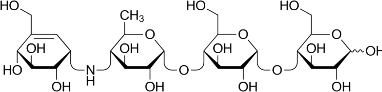
Acarbose is an anti-diabetic medication used to treat type 2 diabetes and prediabetes. When used with insulin or other oral diabetic treatments, it reduces the body's digestion of carbohydrates 21-23.
-
Mechanisms of action
Acarbose is the alpha glucosidase inhibitor. In the small intestine, pancreatic alpha-amylase and membrane-bound intestinal alpha-glucoside hydrolase are inhibited by the complex oligosaccharide acarose, but in the large intestine, acarose hydrolyzes complex carbs to oligosaccharides. Alpha-Glucosidase hydrolle converges on trisaccharide’s (sucrose, maltose) and disaccharides in the brush border of the small intestine (glucose, fructose). Acarbose reduces postprandial glucose blood concentrations by slowing glucose absorption by delaying carbohydrate digestion 21-23.
-
Side effects of Acarbose
GI symptoms such as flatulence, diarrhea, and abdominal pain are the most common side effects. A high-carbohydrate diet may aggravate the GI symptoms. As treatment progresses, GI symptoms usually improve. Side effects may make it difficult to stick to acarbose pharmacotherapy. Serum transaminases may rise during acarbose therapy. Elevations are usually asymptomatic and reversible once the drug is stopped.
Table 4. Drug profile of Acarbose 23
Drug
Acarbose
Tradename
Glucobay, Precose, Prandase
Structure
Molecular formula
C25H4NO18
Molecular weight
645.608g·mol−1
Dose
75-300mg/day
Category
Oral hypoglycemic agent
Class
α-Glucosidase inhibitor
Acarbose monotherapy should not cause hypoglycemia. When combined with hypoglycemic agents like sulfonylureas or insulin, however, the therapy can increase the risk of hypoglycemia
21-23.
-
-
METHODOLOGY
-
Collection and Authentication of Plant
The aerial parts of Salvia nemorosa were collected from a region in Bihar, India. The plant was authenticated by a qualified botanist, and a voucher specimen was deposited in the herbarium of the institute for future reference.
-
Extraction of Plant
The collected plant material was thoroughly washed, shade-dried, and ground into a fine powder. A total of 10 g of the powdered aerial parts was extracted using the maceration method with 200 mL of methanol at room temperature. The mixture was kept for 72 hours with occasional shaking. The extract was then filtered, and the solvent was removed under reduced pressure at 40°C using a rotary evaporator to obtain a solvent-free methanolic extract.
-
Phyto chemical analysis of plant
Qualitative chemical identification Chemical tests for identifying various phytoconstituents were carried out on methanolic extract of Salvia nemorosa constituents.
-
Salkowski’s Test for Sterols and Triterpenoids:
To 2 mL of the methanolic extract in chloroform, a few drops of concentrated sulfuric acid were added. The mixture was shaken gently and allowed to stand. The appearance of a red color in the lower chloroform layer indicated the presence of sterols, while the formation of a yellow-colored lower layer indicated the presence of triterpenoids.
-
-
α-Amylase Inhibitory Assay
The α-amylase inhibitory activity of the extract was assessed using a modified version of a standard in vitro method.
Substrate Preparation: Starch azure (2 mg) was suspended in 0.2 mL of 0.5 M Tris-HCl buffer (pH 6.9) containing 0.01 M CaCl₂. The mixture was boiled for 5 minutes and pre- incubated at 37°C for another 5 minutes.
Sample Preparation and Enzyme Reaction: The plant extract was dissolved in a suitable solvent to prepare test concentrations of 5, 10, 25, and 50 μg/ml. To the substrate solution, 0.2 mL of each concentration of plant extract was added, followed by 0.1 mL of porcine pancreatic α-amylase (2 U/mL in Tris-HCl buffer). The reaction mixture was incubated at 37°C for 10 minutes.
Termination and Measurement: The enzymatic reaction was terminated by adding 0.5 mL of 50% acetic acid. The resulting mixture was centrifuged at 3000 rpm for 5 minutes at 4°C. The absorbance of the supernatant was measured at 595 nm using a UV-Visible spectrophotometer (Shimadzu UV-1900, Japan). The percentage inhibition of α-amylase activity was calculated for each concentration.
Calculation:
Theα-amylase inhibitory activity was calculated by using the formula: Inhibition%= Abs540nm (Control)-Abs540nm (drug sample ) ×100 Abs 540nm (Control)
-
Study design
Table5. Concentration taken in study design
Test tube No.
Concentration
01
5μg/ml nemorosa extracts
02
10μg/ml nemorosa extracts
03
25μg/ml nemorosa extracts
04
50μg/ml nemorosa extracts
-
-
RESULTS AND DISCUSSION
-
Plant Extraction
The aerial parts of Salvia nemorosa were subjected to maceration with methanol for 48 hours. The methanolic extract obtained was green in color and semi-solid in consistency. The percentage yield of the extract was calculated and is presented in Table 6.
Table 6. Percentage yield of methanolic extract of Salvia nemorosa
Parameter
Extraction
% yield
10.65w/w
-
Phytochemical Screening
Preliminary phytochemical analysis of the methanolic extract revealed the presence of triterpenoids and sterols. The result of Salkowski’s test showed the formation of a yellow- colored lower layer, indicating the presence of triterpenoids.
Table 7. Phytochemical screening of methanolic extract of Salvia nemorosa
Sr.No
Test
Observation
Inference
1
Steroid terpenoids
Yellow colored layer was formed in the figure 7.1
Presence of the terpenoids
-
α-Amylase Inhibitory Activity
The methanolic extract of Salvia nemorosa showed dose-dependent α-amylase inhibitory activity. As the concentration of the extract increased, a corresponding increase in percentage inhibition was observed, as shown in Table 8.
Table 8: %α-Amylase inhibition by methanolic extract of Salvia nemorosa
Sr. No
Concentration(µg/ml)
% inhibition
1
5 μg/ml
44.2 %
2
10 μg/ml
63.8 %
3
25 μg/ml
82.9 %
4
50 μg/ml
93.36 %
The inhibitory effect of the extract was compared with acarbose, a standard α-amylase inhibitor. Acarbose also showed dose-dependent inhibition, but the percentage inhibition was significantly lower than that of the plant extract (Table 9).
Table9. α-Amylase inhibition by Acarbose (standard)
Sr. No
Concentration(µg/ml)
% inhibition
1
5 μg/ml
29.13%
2
10 μg/ml
32.52%
3
25 μg/ml
37.65%
4
50 μg/ml
48.17%
The methanolic extract demonstrated stronger α-amylase inhibitory activity than acarbose, particularly at higher concentrations. The IC₅₀ value of the extract was calculated to be 4.44 μg/mL, indicating high potency.
Discussion
Inhibitors of α-amylase delay carbohydrate digestion in the small intestine and consequently reduce postprandial blood glucose levels. This mechanism is an effective therapeutic strategy for the management of type 2 diabetes mellitus. The findings of this study reveal that the methanolic extract of Salvia nemorosa possesses significant α-amylase inhibitory activity, surpassing the standard drug acarbose in efficacy. The observed activity may be attributed to the presence of bioactive phytoconstituents such as β-pinene, α-humulene, and β-
caryophyllene, which have been previously reported to exhibit antidiabetic properties. These findings support the traditional use of Salvia species in diabetes management and suggest that Salvia nemorosa could serve as a promising source of natural α-amylase inhibitors.
Further studies involving in vivo models and compound isolation are recommended to explore the full therapeutic potential of Salvia nemorosa in diabetes treatment.
-
-
CONCLUSION
The present study demonstrates that the methanolic extract of Salvia nemorosa exhibits significant α-amylase inhibitory activity in a dose-dependent manner. Notably, the extract showed greater inhibition compared to acarbose, a standard antidiabetic drug, suggesting its potential as a natural α-amylase inhibitor.
These findings indicate that Salvia nemorosa may be a promising candidate for the development of plant-based therapies for the management of diabetes mellitus. However, to establish its clinical relevance and therapeutic efficacy, further investigations including in vivo studies and clinical trials are necessary.
Acknowledgement: The authors would like to express their sincere gratitude to the Faculty of Pharmacy, Noble University, Junagadh and Faculty of Pharmacy, Marwadi University, Rajkot for providing constant support and research infrastructure.
Author Contribution:
SG, PV: Conceptualization, Supervision, Formal analysis,
JV: Investigation, Methodology, Writing original draft, Visualization VV, MB and SB: Draft, Editing and Reviewing, Data curation
Funding: No funding was received from any organization for this work.
Ethics declaration: There is no Research included in paper which Involves Animals. Data Availability: All data generated or analyzed during the current study are included. Conflict of Interest: The authors declare no conflict of interest.
REFERENCES
-
Okur ME, Karantas ID, Siafaka PI. Diabetes Mellitus: A Review on Pathophysiology, Current Status of Oral Pathophysiology, Current Status of Oral Medications and Future Perspectives. ACTA Pharm Sci. 2017;55(1):61.
-
Unnikrishnan R, Anjana RM, Mohan V. Diabetes mellitus and its complications in India. Nat Rev Endocrinol. 2016 Jun;12(6):357–70.
-
Lakhtakia R. The History of Diabetes Mellitus. Sultan Qaboos Univ Med J. 2013 Aug;13(3):368–70.
-
Tripathi KD. Essentials of Medical Pharmacology. 7th ed. New Delhi: Jaypee Brothers Medical Publishers; 2013. p. 258–81.
-
Mohan H. Textbook of Pathology. 6th ed. New Delhi: Jaypee Brothers Medical Publishers; 2018. p. 818–28.
-
Ulubelen A, Topcu G, Sönmez U, Eris C. Terpenoids from Salvia nemorosa. Phytochemistry. 1994 Mar;35(4):1065–7.
-
Bagheri G, Mousavi SA, Mousavi S. Karyology, morphology and anatomy studies of medicinal plant Salvia nemorosa in the North East of Iran. Entomol Appl Sci Lett. 2016
Jan 1; 3:32–6.
-
Talebi SM, Mahdiyeh M, Nohooji MG, Akhani M. Analysis of trichome morphology and density in Salvia nemorosa L. (Lamiaceae) of Iran. Botanica. 2018 Jun 1;24(1):49– 58.
-
Chizzola R. Composition and variability of the essential oil of Salvia nemorosa (Lamiaceae) from the Vienna area of Austria. PubMed [Internet]. [cited 2023 Mar 10]. Available from: https://pubmed.ncbi.nlm.nih.gov/23413579/
-
Tabei SM, Alizadeh A. Phytochemical constituents and antimicrobial activity of Salvia. Bangladesh J Bot. 2018 Dec 31;47(4):847–54. Available from: https://www.banglajol.info/index.php/BJB/article/view/47362
-
Santos ES, Abrantes Coelho GL, Saraiva Fontes Loula YK, Saraiva Landim BL, Fernandes Lima CN, Tavares de Sousa Machado S, et al. Hypoglycemic, Hypolipidemic, and Anti-Inflammatory Effects of Beta-Pinene in Diabetic Rats. Evid Based Complement Alternat Med. 2022 May 17; 2022:8173307. Available from: https://pmc.ncbi.nlm.nih.gov/articles/PMC9129963/
-
Kumawat VS, Kaur G. Insulinotropic and antidiabetic effects of β‐caryophyllene with L‐arginine in type 2 diabetic rats. J Food Biochem. 2020 Apr;44(4): e13156. Available from: https://onlinelibrary.wiley.com/doi/abs/10.1111/jfbc.13156
-
Gunawan IWG, Bawa Putra AA, Widihati IAG. The Response to Oxidative Stress α- Humulene Compounds Hibiscus Manihot L Leaf on The Activity of 8-Hydroxy-2- Deoksiquanosin Levels Pancreatic β-Cells in Diabetic Rats. Biomed Pharmacol J. 2016 Aug 25;9(2):433–41.
-
Bahadori MB, Asghari B, Dinparast L, Zengin G, Sarikurkcu C, Abbas-Mohammadi M, et al. Salvia nemorosa L.: A novel source of bioactive agents with functional connections. LWT. 2017 Jan 1; 75:42–50.
-
World Health Organization. Diabetes - India [Internet]. [cited 2023 Apr 1]. Available from: https://www.who.int/india/health-topics/mobile-technology-for-preventing-ncds
-
Kasole R, Martin HD, Kimiywe J. Traditional Medicine and Its Role in the Management of Diabetes Mellitus: Patients’ and Herbalists’ Perspectives. Evid-Based Complement Altern Med. 2019; 2019:2835691.
-
Skalli S, Hassikou R, Arahou M. An ethnobotanical survey of medicinal plants used for diabetes treatment in Rabat, Morocco. Heliyon. 2019 Mar;5(3): e01421.
-
Chizzola R. Composition and variability of the essential oil of Salvia nemorosa (Lamiaceae) from the Vienna area of Austria. Nat Prod Commun. 2012 Dec;7(12):1671–2.
-
Dewangan H, Tiwari RK, Sharma V, Shukla SS, Satapathy T, Pandey R. Past and Future of in-vitro and in-vivo Animal Models for Diabetes: A Review. Indian J Pharm Educ Res. 2017 Dec 30;51(4s): s522–30.
-
McIver LA, Preuss CV, Tripp J. Acarbose. In: StatPearls [Internet]. Treasure Island (FL): StatPearls Publishing; 2023 [cited 2023 Apr 17]. Available from: http://www.ncbi.nlm.nih.gov/books/NBK493214/
-
Acarbose - StatPearls - NCBI Bookshelf [Internet]. [cited 2023 Apr 17]. Available from: https://www.ncbi.nlm.nih.gov/books/NBK493214/
-
Acarbose. In: Wikipedia [Internet]. 2023 [cited 2023 Apr 17]. Available from: https://en.wikipedia.org/w/index.php?title=Acarbose&oldid=114421955 8