
The Rising Incidence of Sudden Heart Attacks: Causes, Risk Factors, and Prevention Strategies
Km. Deeksha1*, Zoobi Tahir2
1Department of Pharmacology, Anand college of Pharmacy, Sharda University, Agra, UP, India
2Mahatma Jyotiba Phule, Rohilkhand University, Bareilly, UP, India
Corresponding Author: Km. Deeksha; Email: deeksharoyal45@gmail.com
ABSTRACT
A growing trend of unexpected heart attacks among young individuals is raising significant health concerns. This issue demands attention due to its alarming rise and implications for public health. The leading cause of heart attacks is coronary artery disease, characterized by plaque buildup in coronary arteries, which can rupture and block blood flow to the heart. Contributing factors include high blood pressure, diabetes, obesity, smoking, and drug use. Since 2000, the incidence of heart attacks in individuals under 40 has risen by 2% annually until 2016, underscoring the urgency for targeted interventions. Furthermore, the COVID-19 pandemic has worsened the scenario, as the virus has been linked to heart complications and systemic inflammation, increasing the risk of cardiac events. A comprehensive prevention strategy is essential to address this issue. Promoting healthy lifestyle changes, ensuring regular health screenings, and managing pre-existing conditions are critical. Public health initiatives should focus on educating young individuals about heart health, encouraging healthy habits, and improving access to healthcare. Collaborative efforts are vital to mitigate the rising trend of heart attacks and protect at-risk populations.
Keywords: Sudden heart attack, death due to heart attack, coronary artery disease, risk factors, prevention strategies, younger populations
INTRODUCTION
Cardiovascular disease ranks among the leading causes of death globally. The British Government places significant emphasis on health issues related to the developed world as a central focus of its initiatives. Strategies within primary care that emphasize preemptively addressing potential challenges. Investigating heart disease within patient cohorts at general practitioners' offices is a labor-intensive and time-consuming process. Develop only minimal yet noticeable improvements in terms of risk for a limited patient population [1][2]. Evidence is continually accumulating. Engaging in preventive care entails adopting new habits to
maintain better overall health and prevent future illnesses. Specialized medical care and recovery strategies tailored for those with heart disease are delivering encouraging results. Evidence shows that targeted approaches are more successful and economical in their implementation.[3][4]. A heart attack is triggered by a substantial reduction or cessation of blood flow to the heart. The primary reason for blockages in the coronary arteries is the buildup of substances such as fat and cholesterol. As fat and cholesterol accumulate within the body, they create deposits referred to as plaques. Atherosclerosis is the term used to describe the formation of plaque in the arterial walls. There are instances when a plaque can tear, resulting in a clot that blocks the flow of blood [5]. When blood isn't circulating properly, it can lead to harm or pain in some parts of the heart muscle. A heart attack occurs when a blood vessel that delivers oxygen and blood to the heart becomes obstructed. Over time, cholesterol-rich fatty deposits can accumulate and form plaques in the heart's arteries. When a plaque ruptures, it can lead to the formation of a blood clot. The obstruction of blood vessels by a clot can trigger a heart attack. Insufficient blood flow during a heart attack can lead to the death of certain areas of the heart muscle. A heart attack is commonly referred to as a heart blockage [6][7].
Simply understanding health threats or the positive effects of altering your lifestyle doesn’t guarantee any significant change, Modified behaviors[8]. Research indicates that individuals diagnosed with the disease may be more inclined to alter their lifestyle following an event such as a heart attack. However, after experiencing a myocardial infarction (MI), many tend to feel a decline in motivation. The astonishment of the occurrence diminishes, along with the habitual patterns that emerge. The challenges of routine life resurface. The degree to which individuals are prepared and equipped to accept and continue something over time[9]. Altering our way of life is a challenging subject that includes numerous considerations. It is essential to have knowledge about the origins of diseases, the risks of acquiring them, and the diverse economic and social factors involved. To enhance secondary prevention, services should reflect on these elements to provide personalized support for each individual. Patients should be motivated to kick off and stick with their prescribed regimen. Changing how someone acts. The importance of primary care staff in the healthcare field cannot be overstated[10].
PATHOPHYSIOLOGY OF HEART ATTACK
Understanding the mechanisms of diseases and bodily issues is crucial for effective management and treatment. Consider how radioisotope imaging may be utilized today and in the future to assess heart artery disease[11]. The use of radioisotope imaging is considered to provide insights into the effects of diseases on the body and the mechanisms of bodily operations. Transformations in the arm bone are essential for controlling the advancement of the illness and keeping it under surveillance[12][13]. Conditions like reduced blood circulation to the heart, heart attacks, or heart failure can arise from coronary artery disease. Occasionally, it may result in an unanticipated loss of life. When the heart doesn't get enough oxygen, it leads to a condition called myocardial ischemia. It takes place when the requirement for oxygen surpasses the quantity that is present. A faster heartbeat or different bodily alterations can result in an elevated demand. Systolic contraction refers to the mechanism by which the left chamber of the heart circulates blood. The tension within the walls, along with hormones such as catecholamines, affects the energy consumption of the heart muscle[14][15][16].
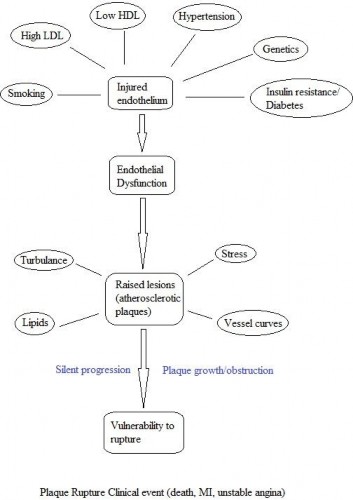
Flow chart 1: How lifestyle, genetic, and metabolic factors contribute to cardiovascular diseases through a stepwise pathological process.
The flowchart outlines the progression of atherosclerosis, beginning with injury to the endothelial cells due to factors such as high LDL, low HDL, smoking, hypertension, insulin resistance, diabetes, and genetics. This injury leads to endothelial dysfunction, which contributes to the formation of raised lesions, or atherosclerotic plaques. Additional factors, including turbulence, stress, vessel curvature, and lipids, play a role in the development of these plaques. Over time, plaques may either silently progress or grow, leading to potential obstructions. Eventually, the plaques become vulnerable to rupture. Once a plaque ruptures, it can trigger clinical events such as death, myocardial infarction (heart attack), or unstable angina (chest pain from reduced blood flow).
MECHANISM OF HEART ATTACK
A heart attack takes place when the circulation of blood to a specific area of the heart is greatly impaired or interrupted, leading to injury to the muscle of the heart. The primary cause of this condition is often the obstruction of the coronary arteries (Fig no. 1).
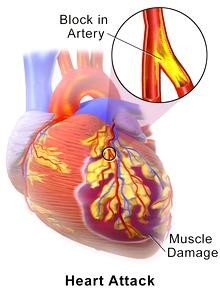
Fig 1: Heart attack
Atherosclerosis, which involves the accumulation of fat, cholesterol, and additional materials, is the common cause of this blockage. If this plaque fractures, it may lead to the formation of a blood clot that hinders the flow of blood [17] [18].
-
Atherosclerosis and Plaque Rupture
Atherosclerosis is the primary reason behind most heart attacks. With the passage of time, arteries may develop plaque buildup along their walls, which narrows them and restricts blood movement. The breaking of a plaque permits the underlying material to blend with blood, which triggers the development of a blood clot. This blockage can swiftly block the artery, hindering the supply of oxygenated blood to the heart [19].
-
Ischemic Cascade
If blood flow is interrupted, the heart muscle does not receive enough oxygen, which causes it to suffer. The onset of the ischemic process occurs instantly. If circulation isn't resumed promptly, generally within a half-hour, the heart cells begin to perish and become irretrievable. The area of the heart that tends to sustain the most damage is often the subendocardial region, located within the innermost layer. When tissue undergoes necrosis, it may result in a more extensive type of damage referred to as transmural infarction [20].
-
Consequences of Ischemia
A lack of adequate oxygen results in cell death through two mechanisms: an abrupt form of death known as necrosis or a more orderly form called apoptosis. Scar tissue ultimately forms in place of the dead tissue, but unlike healthy heart muscle, it does not contract. This modification can affect the way electrical impulses travel in the heart, which could lead to a higher chance of experiencing irregular heartbeats. This could result in significant health risks, such as heart failure or a cardiac arrest [21].
-
Other Causes
Although atherosclerosis is the leading factor, there are additional causes that can trigger a heart attack. Among these are sudden contractions of the arteries surrounding the heart that block blood flow, along with disorders like spontaneous coronary artery dissection (SCAD), which involves a rupture in the artery wall[18][22].
EPIDEMIOLOGY
A myocardial infarction (MI) constitutes a major health threat that can endanger life and is regarded as one of the most serious heart-related issues. The symptoms and signals associated with coronary artery disease (CAD). This condition is categorized into two distinct sections. A heart attack can be classified as either ST-elevation myocardial infarction (STE-MI) or non- ST-elevation myocardial infarction (NSTE-MI), the latter of which is an abbreviation for Non- ST Elevation Myocardial Infarction. This condition involves a heart attack that occurs without a complete obstruction of blood flow, leading to insufficient oxygen for the heart muscle, which does not result in total damage. Because unstable angina represents a significant health risk. Considered a serious cardiovascular issue, a heart attack can be classified under significant heart problems[23] [24]. More than 3 million individuals are diagnosed with STE- MI each year. Annually, more than 4 million individuals are engaged STE-MI problem. Despite being predominantly associated with affluent countries, heart attacks are commonly seen in lower-income nations as well. In a study with 19,781 people who have coronary artery disease (CAD), they found the rate of heart attacks (MI) was 23.3%. Over the past few years, there has been a significant decline in the incidence of STE-MI cases in both European nations and the United States[25][26]. Cardiovascular events, specifically heart attacks, rank as the primary cause of mortality globally[27]. While the global heart attack death rate has fallen dramatically, the number of individuals developing heart failure is on high level. Individuals with heart failure related to heart attacks experience significantly high mortality and morbidity rates[28]. In the U.S., HF negatively influences healthcare services, with 6 million people impacted and 300,000 experiencing significant consequences. Annually, there are deaths contributing to roughly $40 billion in expenditures[29][30][31].
MI has a profoundly important influence on the economy. In 2010, over 1.1 million people were hospitalized in the United States after heart attacks, and the total cost was about $450 billion[32]. In heart disease patients, body weakness is a widespread concern, especially in those who are older. This could contribute to a loss of weight, exhaustion, difficulties in movement, a slower walking pace, and lower amounts of physical activity. The relationship between obesity, insufficient physical activity, high triglyceride levels, and inflammation markers like hs-CRP tends to be largely non-interdependent[33], [34], [35]. The relationship between insulin and cardiovascular (CV) risk factors is significant. A range of publications has demonstrated a widespread rise in factors that threaten heart health, notably diabetes, high cholesterol, obesity, and smoking habits[36]. Among patients younger than 55 who suffered a heart attack, smoking was recognized as a significant risk factor for heart issues in 80% of instances[37].
REASON OF HEART ATTACK – PRESENT SCENARIO
-
Traditional Risk Factors
-
Hypertension: Hypertension causes the heart to work more intensely, potentially harming the arteries in the process.
-
Hyperlipidemia: Increased levels of low-density lipoprotein (LDL), often referred to as bad cholesterol, result in plaque formation.
-
Diabetes Mellitus: Increased levels of low-density lipoprotein (LDL), often referred to as bad cholesterol, result in plaque formation.
-
Smoking: The use of tobacco injures blood vessels and facilitates the buildup of plaque.
-
Obesity: Excessive weight can contribute to hypertension, diabetes, and difficulties in managing cholesterol levels. [38][39][40]
-
-
Non-Traditional Risk Factors
-
Sedentary Lifestyle: Living a mostly inactive lifestyle may increase the risk of becoming overweight and experiencing heart problems.
-
Chronic Stress: Prolonged stress may lead to detrimental behaviors and physical changes that increase the likelihood of a heart attack.
-
Sleep Apnea: This condition, known as sleep apnea, results in breathing interruptions while sleeping and is connected to elevated blood pressure and irregular heart rhythms.[41][42][43]
-
-
Emerging Factors in Heart Attack Incidence
Some recent investigations have revealed additional elements that could lead to an increased likelihood of heart attacks:
-
Inflammation: The development of atherosclerosis is significantly influenced by prolonged inflammation. The presence of biomarkers like C-reactive protein (CRP) assists in determining the degree of inflammation in individuals potentially facing heart attack risks.[38]
-
Air Pollution: Exposure to air pollution through breathing has been associated with a higher incidence of cardiovascular problems, such as heart attacks. Minute particles present in the atmosphere can result in bodily inflammation and impair blood vessel performance.
-
Socioeconomic Status: Lower-income individuals commonly suffer from more heart- related ailments because they typically struggle to obtain proper healthcare, healthy food choices, and education regarding health risks.[44]
-
Genetic Predisposition: If someone has relatives with heart disease, their chances of encountering heart issues may be elevated. Often, this is a result of hereditary factors that influence how cholesterol is processed in the body and ensure the wellbeing of blood vessels. [45]
-
RECENT TRENDS IN HEART ATTACKS
Age and Gender Differences: Age and gender play a significant role in influencing the frequency of heart attacks. While heart attacks have historically been more common in older adults, recent data indicates a rising trend in cases among younger individuals. Furthermore, women tend to manifest different indicators than men, which can contribute to a postponement in diagnosis.[46]
Impact of COVID-19: The pandemic caused by COVID-19 has profoundly impacted the wellbeing of the heart. Evidence suggests that the rise in heart attack cases can be attributed to individuals not receiving timely medical care and the anxiety stemming from lockdown situations. [47]
Major Causes of Heart Attacks:
Heart Attack Risk and COVID-19 Vaccines: The pandemic heightened fears surrounding the safety of COVID-19 vaccines in relation to heart health, largely driven by reports of inflammatory heart conditions and clotting issues. Research indicates that vaccines, particularly the mRNA types such as Pfizer-BioNTech and Moderna, have a high safety profile, with heart-related issues being quite rare[48].
-
Myocarditis and Pericarditis: Studies have shown that there is a slightly elevated risk of myocarditis and pericarditis following vaccination, particularly among young males after receiving their second dose of mRNA vaccines. In most instances, the cases tend to be mild
and improve with appropriate treatment.
-
Thrombosis with Thrombocytopenia Syndrome (TTS): Scientists have discovered an unusual link between adenovirus-based vaccines, including AstraZeneca and Johnson & Johnson, and cases of individuals experiencing blood clots alongside low platelet counts.[49]
-
Cardiovascular Benefits of Vaccination: It's crucial to understand that COVID-19 significantly raises the risk of severe heart conditions, such as heart attacks, particularly in individuals with pre-existing health problems.[47][50]
Dental Health and Heart Attack Risk: Poor oral health, particularly gum conditions such as periodontitis, is associated with an increased risk of heart attacks. Inflammation serves as a vital factor that bridges the two conditions. The gums can serve as a pathway for oral bacteria to enter the blood. Such reactions can induce bodily inflammation, which might contribute to artery hardening and could heighten the chances of experiencing a heart attack.[51]
-
Periodontal Disease: Evidence suggests that there is an increased risk of heart problems among those suffering from gum disease. Gum swelling can lead to body-wide inflammation, possibly resulting in the accumulation of plaque in the arterial walls.
-
Oral Bacteria: Research has found that bacteria from the mouth can be present in plaque that contributes to high cholesterol levels in the arteries, suggesting that oral hygiene might play a crucial role in maintaining heart health.[52][53]
Athletes, Sports Persons, and Heart Attack Risk: Despite the general belief that athletes possess strong heart health because of their frequent exercise, they can still encounter various risks, especially in the presence of unnoticed heart issues.[54]
-
Hypertrophic Cardiomyopathy (HCM): Hypertrophic cardiomyopathy is a genetic illness characterized by excessive thickness in the heart muscle, which impairs the heart's ability to circulate blood properly. It serves as a significant cause of abrupt cardiac problems among sports professionals. Engaging in intense physical activity may exacerbate this issue and increase the risk of experiencing a heart attack.
-
Arrhythmias: Endurance sports participants, especially athletes, could face episodes of irregular heartbeat as a result of the persistent pressure on their cardiovascular system. In some cases, this can trigger a heart disorder called arrhythmogenic right ventricular cardiomyopathy (ARVC), which elevates the risk of experiencing sudden heart failure.[55][56][57]
-
Coronary Artery Disease in Older Athletes: Health problems are more commonly passed down to young athletes, while older ones could be suffering from heart issues that have gone unnoticed. These complications may raise the chances of experiencing a heart attack during strenuous exercise.[58][59]
Heart Attack Triggers in Athletes and Sports Persons: There are specific elements that may lead to heart attacks among athletes:
-
Dehydration: When participating in endurance sports, losing fluids through dehydration can lower blood volume, complicating the heart's effort to pump blood properly.
-
Electrolyte Imbalance: Strenuous physical activity can alter the levels of key minerals in the body, which may impact cardiac function and lead to abnormal heart rhythms.
-
Stress and Competition: Competing can trigger a surge of adrenaline due to the associated stress. Such an increase can cause heightened blood pressure and heart rate, possibly resulting in a heart attack for those at risk.[60][61][62]
Other Contributing Factors to Heart Attacks: Various other causes that could result in heart attacks consist of:
-
Inflammation and Autoimmune Disorders: Ongoing inflammatory diseases, including rheumatoid arthritis and lupus, may heighten the risk of cardiac complications, including heart attacks, as they lead to continuous inflammation and arterial damage.
-
Substance Use: Abusing substances like cocaine, amphetamines, and alcohol can provoke spasms or irregular rhythms in the heart's arteries, increasing the risk of heart attacks.
-
Mental Stress and Depression: Mental stress, particularly in combination with other risks, heightens the probability of experiencing heart complications[11][63][64]
Prevention of heart attack:
Modifying your daily habits plays a significant role in making positive changes. Taking a moment to tend to heart-related problems. These adjustments include modifying your diet, engaging in consistent physical activity, stopping smoking, and discovering effective stress management techniques while maintaining a healthy weight.[65] Adopting a different way of living can lower your chances of encountering cardiovascular diseases (CVDs) and may provide support in regulating existing health problems (as shown in Table 1). People can boost their heart health and mitigate the effects of heart disease on themselves and their communities by embracing healthy lifestyle choices. For effective heart problem management, lifestyle alterations and mind-body therapies should hold significant importance in addition to drug treatments and other medical therapies.
Table 1. An overview of modifications to daily routines and their impact on factors contributing to heart disease risk.
S. No
Lifestyle Modification
Effects on CVD Risk Factors
1
Healthy diet (e.g. Mediterranean diet, DASH diet)
Reduces blood pressure, LDL cholesterol, inflammation; improves lipid profile
2
Smoking cessation
Reduces risk of atherosclerosis, thrombosis, hypertension, heart attack, stroke
3
Regular exercise and physical activity
Lowers blood pressure, improves cholesterol profile, reduces inflammation, aids
weight loss
4
Moderate alcohol intake
Increases HDL cholesterol; reduces inflammation
5
Weight management
Reduces blood pressure, cholesterol levels, inflammation; improves insulin sensitivity
6
Adequate sleep
Reduces inflammation, improves insulin sensitivity and lipid metabolism
7
Stress management
Lowers blood pressure and heart rate
To effectively prevent and slow down diseases, methods like practicing meditation and yoga, adopting a diet higher in whole and plant-based foods, incorporating herbs like hawthorn and rauwolfia serpentina, and increasing physical activity can be beneficial in reducing stress. Greater attention should be given to these holistic techniques, as they can greatly benefit individuals' well-being and pose fewer risks compared to traditional medications. [66] (Details see in table no. 1)
FUTURE ASPECTS
Advancements in Early Detection and Biomarkers
-
Artificial Intelligence & Machine Learning: The identification of high-risk individuals is facilitated by the integration of AI and ML models in analyzing real-time data from wearable devices and electronic health records.[67]
-
Genetic Testing & Biomarkers: The future potential of personalized medicine lies in genetic testing and biomarkers to predict an individual's risk of heart attack based on their genetic susceptibilities.
-
Real-Time Monitoring Devices: Improved wearable and implantable devices continuously monitor heart rhythms and identify early signs of cardiac events, leading to prompt medical intervention.[68][69]
Therapeutic Innovations
-
Regenerative Medicine: Advancements in regenerative medicine focus on using stem cell therapy and tissue engineering to repair heart tissues that have been damaged as a result of a heart attack
-
Gene Therapy: Emerging gene therapies focus on specific genetic mutations or dysfunctional cellular pathways to decrease the likelihood of heart attacks.[69]
-
Immunotherapy for Atherosclerosis: Investigating the use of immune-modulating drugs to target inflammation and plaque formation in coronary arteries is a focus of research for atherosclerosis treatment.
-
Nanotechnology: Nanotechnology involves utilizing nanoparticles to deliver drugs to targeted areas, ensuring that medicinal substances effectively reach specific damaged sites within the cardiovascular system.[47][70]
Role of Pharmacogenomics in Treatment
Drugs like beta-blockers, ACE inhibitors, and statins can be customized according to an individual's genetic makeup to enhance the prevention and treatment of heart attacks. Working on treatments that reduce negative reactions to medications and enhance patients' compliance with treatment. [71][72]
Public Health Interventions and Policy Changes
Initiation of extensive cardiovascular risk screening programs involves the use of non-invasive diagnostic tools to detect individuals at risk of heart disease at an earlier stage. Adjusting health policies to concentrate on decreasing risk factors such as hypertension, diabetes, obesity, and smoking, with a focus on the importance of diet and physical activity. Promoting heart-healthy behaviors in workplaces and communities is a priority, with an emphasis on reducing stress and encouraging physical fitness.[30][73][74]
Preventive Approaches to Combat Lifestyle Risk Factors
-
Digital Health Solutions for Behavioral Changes: Encouraging adherence to heart- healthy diets, physical activity, and smoking cessation through the use of mobile health apps and telemedicine is a way to implement digital health solutions for behavioral changes.[43]
-
Nutritional Interventions: Exploring future research on specific diets, such as plant-based diets or Mediterranean-style eating, to reduce the risk of sudden heart attacks is a focus of nutritional interventions.
-
Stress Management: The reduction of stress, which is a well-known risk factor for heart
-
disease, can be achieved through mental health interventions and therapies such as mindfulness, meditation, and cognitive behavioral therapy (CBT).[75][76]
Impact of Global Climate Change on Heart Health
Research has been conducted on the connection between increasing global temperatures and the risk of cardiovascular issues, especially in populations that are more vulnerable. Investigating the potential impact of air quality and particulate matter exposure on future heart disease burdens, with a focus on implementing clean energy policies to decrease pollution levels.[77][78]
Technology in Emergency Response Systems
Mobile Defibrillator Networks: Expansion of Automated External Defibrillator (AED) networks in the community to ensure quick response during sudden cardiac arrests is the focus of Mobile Defibrillator Networks.
Integration of Smart Devices in Emergency Services: Incorporating Smart Devices into Emergency Services: Utilizing mobile apps to notify emergency personnel about an ongoing cardiac emergency, providing location information to facilitate prompt intervention.
Drones for Emergency Care: Using drones for emergency care involves the delivery of AEDs to remote or traffic-congested areas, which helps in reducing response time for emergency services.[68][70][79]
Long-Term Prognosis and Rehabilitation
Home-Based Cardiac Rehabilitation Programs: Expanding the utilization of telehealth and wearable technology to facilitate personalized rehabilitation at home for patients recuperating from heart attacks: Home-Based Cardiac Rehabilitation Programs.
Psychosocial Support Systems: Increased focus is being placed on providing psychological support for individuals recovering from heart attacks, as well as incorporating mental health assistance into their rehabilitation programs.[75][80][81]
DISCUSSION
There is a growing concern in public health regarding the rising number of sudden heart attacks, especially among younger people. This conversation delves into the root causes, factors that increase the risk, and possible methods of prevention to address this worrying pattern. Studies conducted recently suggest that the increase in heart attack cases can be attributed to different lifestyle changes and health conditions. One major contributing factor is the significant decrease in physical activity, particularly among younger people. A large number of young adults now live largely sedentary lifestyles, raising the risk of developing coronary artery disease (CAD) and other cardiovascular problems.
The rise in obesity and elevated cholesterol levels can be attributed to the widespread adoption of high-fat diets comprising processed foods and sugars. These dietary preferences are associated with a higher incidence of diabetes and hypertension, both of which are significant contributors to heart attack risk. Existing health issues have been worsened by the pandemic, resulting in a surge in heart attacks. COVID-19 has the potential to directly harm heart cells and induce widespread inflammation, leading to destabilization of arterial plaques and an increased likelihood of cardiac events. Additionally, lifestyle modifications during lockdowns, such as increased alcohol intake and poor dietary decisions, have further compromised heart health.
Raising public awareness about the signs of heart attacks, particularly the unusual symptoms in women, can result in earlier treatment. Indications may consist of chest discomfort, difficulty breathing, tiredness, or unease in different parts like the back or jaw.
CONCLUSION
The surge in sudden heart attacks can be linked to a mix of lifestyle choices, genetic predispositions, and environmental factors. Major risk factors encompass high blood pressure, obesity, diabetes, smoking, and a sedentary lifestyle, all of which can significantly heighten the chances of cardiovascular events. Furthermore, underlying conditions like coronary artery disease and arrhythmias further worsen these risks.
Preventive actions are vital in addressing this pattern. People can lower their risk by embracing healthier lifestyles—such as maintaining a well-rounded diet abundant in fruits and vegetables, participating in regular physical activity, managing stress, and abstaining from tobacco use. Routine health check-ups to monitor blood pressure and cholesterol levels are also crucial for early identification and handling of potential heart problems. In addition, saving lives involves educating people about identifying heart attack symptoms and the importance of seeking immediate medical help. Raising community awareness through programs that advocate for CPR training and the presence of automated external defibrillators (AEDs) in public areas can improve survival rates during crises. Dealing with the increasing occurrence of sudden heart attacks necessitates a comprehensive approach that combines individual accountability with broader public health campaigns aimed at promoting heart health. By giving priority to preventive measures and nurturing a culture of health consciousness, we can significantly reduce the risks associated with sudden heart-related incidents.
LIST OF ABBREVIATIONS
-
CAD - Coronary Artery Disease
-
MI - Myocardial Infarction
-
STEMI - ST-Elevation Myocardial Infarction
-
NSTEMI - Non-ST-Elevation Myocardial Infarction
-
SCAD - Spontaneous Coronary Artery Dissection
-
LDL - Low-Density Lipoprotein
-
HDL - High-Density Lipoprotein
-
HF - Heart Failure
-
CV - Cardiovascular
-
CRP - C-Reactive Protein
-
hs-CRP - High-Sensitivity C-Reactive Protein
-
mRNA - Messenger Ribonucleic Acid
-
TTS - Thrombosis with Thrombocytopenia Syndrome
-
HCM - Hypertrophic Cardiomyopathy
-
ARVC - Arrhythmogenic Right Ventricular Cardiomyopathy
-
CVD - Cardiovascular Diseases
-
DASH - Dietary Approaches to Stop Hypertension
-
AI - Artificial Intelligence
-
ML - Machine Learning
-
CBT - Cognitive Behavioral Therapy
-
AED - Automated External Defibrillator
-
CAD - Coronary Artery Disease
REFERENCES
-
Family Heart Study Group, “Randomised controlled trial evaluating cardiovascular screening and heart study,” BMJ, vol. 308, no. jANuARY, pp. 313–320, 1994.
-
I. Cancer and O. Study, “Effectiveness of health checks conducted by nurses in primary care: results of the OXCHECK study after one year. Imperial Cancer Research Fund OXCHECK Study Group.,” BMJ, vol. 308, no. 6924, pp. 308–12, 1994, [Online].
-
C. B. IJsselmuiden and R. R. Faden, “The New England Journal of Medicine Downloaded from nejm.org on January 31, 2011. For personal use only. No other uses without permission. Copyright
© 1992 Massachusetts Medical Society. All rights reserved.,” vol. 326, 1992.
-
J. H. MUSSER, “Medical Science,” Am. J. Med. Sci., vol. 185, no. 4, pp. 578–580, 1933.
-
O. Kuhn, “Science Break: Heart Attacks,” no. June 2016, 2020.
-
“Science Break: Heart Attacks | June 2016 | CSEG RECORDER.” Accessed: Sep. 15, 2024. [Online].
-
“Heart attack - Symptoms & causes - Mayo Clinic.” Accessed: Sep. 15, 2024.
-
C. Davison, G. D. Smith, and S. Frankel, “Lay epidemiology and the prevention paradox: The implications of coronary candidacy for health education,” Sociol. Heal. Illn. A Read., vol. 13, no. I,
pp. 47–58, 2013.
-
“Burke1995.Pdf.” 1995.
-
P. Murchie, N. C. Campbell, L. D. Ritchie, and J. Thain, “Running nurse-led secondary prevention clinics for coronary heart disease in primary care: Qualitative study of health professionals’ perspectives,” Br. J. Gen. Pract., vol. 55, no. 516, pp. 522–528, 2005.
-
P. Libby, “Atheroma: More than mush,” Lancet, vol. 348, no. SUPPL.1, 1996.
-
“selwyn-et-al-1997-atherogenic-lipids-vascular-dysfunction-and-clinical-signs-of-ischemic- heart-disease.”
-
E. Braunwald, “Control of myocardial oxygen consumption. Physiologic and clinical considerations,” Am. J. Cardiol., vol. 27, no. 4, pp. 416–432, 1971.
-
E. Braunwald, “Myocardial oxygen consumption: The quest for its determinants and some clinical fallout,” J. Am. Coll. Cardiol., vol. 35, no. 5 SUPPL. B, pp. 45B-48B, 2000.
-
H. Takaoka et al., “Comparison of hemodynamic determinants for myocardial oxygen consumption under different contractile states in human ventricle,” Circulation, vol. 87, no. 1, pp. 59–69, 1993
-
R. E. Austin, N. G. Smedira, T. M. Squiers, and J. I. E. Hoffman, “Influence of cardiac contraction and coronary vasomotor tone on regional myocardial blood flow,” Am. J. Physiol. - Hear. Circ. Physiol., vol. 266, no. 6 35-6, 1994.
-
“Heart Attack: Symptoms, Causes & Treatment.” Accessed: Sep. 17, 2024. [Online].
-
“Heart Attack | Johns Hopkins Medicine.” Accessed: Sep. 17, 2024. [Online].
-
“What happens during a heart attack? - Heart Foundation NZ.” Accessed: Sep. 17, 2024. [Online].
-
“Myocardial Infarction - StatPearls - NCBI Bookshelf.” Accessed: Sep. 17, 2024. [Online].
-
“Heart Attack - What Is a Heart Attack? | NHLBI, NIH.” Accessed: Sep. 17, 2024. [Online].
-
“What is a Heart Attack? | American Heart Association.” Accessed: Sep. 17, 2024. [Online].
-
Stein, Paul D., Fowler, Sarah E., Goodman, “需要引用的霍奇金第二肿瘤new England Journal,” N. Engl. J. Med., vol. 355, pp. 11–20, 2006.
-
K. Thygesen, J. S. Alpert, and H. D. White, “Universal definition of myocardial infarction,” Circulation, vol. 116, no. 22, pp. 2634–2653, 2007.
-
K. Dyrbuś, M. Gąsior, P. Desperak, T. Osadnik, J. Nowak, and M. Banach, “The prevalence and management of familial hypercholesterolemia in patients with acute coronary syndrome in the Polish tertiary centre: Results from the TERCET registry with 19,781 individuals,” Atherosclerosis, vol. 288, no. May, pp. 33–41, 2019, Doi: 10.1016/j.atherosclerosis.2019.06.899.
-
I. R. Dégano et al., “Twenty-five-year trends in myocardial infarction attack and mortality rates, and case-fatality, in six European populations,” Heart, vol. 101, no. 17, pp. 1413–1421, 2015,
-
P. Han et al., “Chapter 9 - Clinical Evidence of Exercise Benefits for Stroke Peipei,” Exerc. Cardiovasc. Dis. Prev. Treat., vol. 999, pp. 131–151, 2017.
-
R. S. Velagaleti et al., “Long-term trends in the incidence of heart failure after myocardial infarction,” Circulation, vol. 118, no. 20, pp. 2057–2062, 2008.
-
Y. Juillière et al., “Heart Failure in Acute Myocardial Infarction: a Comparison Between Patients with or Without Heart Failure Criteria From the FAST-MI Registry,” Rev. Española Cardiol. (English Ed., vol. 65, no. 4, pp. 326–333, 2012.
-
V. L. Roger et al., “Heart Disease and Stroke Statistics—2012 Update,” Circulation, vol. 125, no. 1, 2012.
-
E. F. Lewis et al., “Predictors of Late Development of Heart Failure in Stable Survivors of Myocardial Infarction: The CARE Study,” J. Am. Coll. Cardiol., vol. 42, no. 8, pp. 1446–1453, 2003.
-
W. S. Weintraub et al., “Value of primordial and primary prevention for cardiovascular disease: A policy statement from the American Heart Association,” Circulation, vol. 124, no. 8, pp. 967–990, 2011.
-
S. Zarich, C. Luciano, J. Hulford, and A. Abdullah, “Prevalence of metabolic syndrome in young patients with acute MI: Does the Framingham Risk Score underestimate cardiovascular risk in this population?,” Diabetes Vasc. Dis. Res., vol. 3, no. 2, pp. 103–107, 2006.
-
E. Puymirat and T. Simon, “Association of Changes in Clinical Characteristics and Management with ST-Elevation Myocardial Infarction.,” Jama, vol. 308, no. 10, pp. 998–1006, 2012.
-
A. Chockalingam, N. R. Campbell, and J. G. Fodor, “Worldwide epidemic of hypertension,” Can. J. Cardiol., vol. 22, no. 7, pp. 553–555, 2006.
-
Y. C. Chooi, C. Ding, and F. Magkos, “The epidemiology of obesity,” Metabolism., vol. 92,
pp. 6–10, 2019.
-
J. H. Vähätalo et al., “Association of Silent Myocardial Infarction and Sudden Cardiac Death,” JAMA Cardiol., vol. 4, no. 8, pp. 796–802, 2019.
-
P. Libby, “Inflammation in atherosclerosis,” Arterioscler. Thromb. Vasc. Biol., vol. 32, no. 9,
pp. 2045–2051, 2012.
-
M. Clearfield, “C-reactive protein levels and outcomes after statin therapy.,” Curr. Atheroscler. Rep., vol. 8, no. 1, pp. 8–9, 2006.
-
B. Hewing and U. Landmesser, “LDL, HDL, VLDL, and CVD Prevention: Lessons from Genetics?,” Curr. Cardiol. Rep., vol. 17, no. 7, pp. 1–7, 2015.
-
R. D. Brook et al., “Particulate matter air pollution and cardiovascular disease: An update to the scientific statement from the american heart association,” Circulation, vol. 121, no. 21, pp. 2331– 2378, 2010.
-
“nejmoa054409.”
-
R. B. D’Agostino, M. J. Pencina, J. M. Massaro, and S. Coady, “Cardiovascular disease risk assessment: Insights from Framingham,” Glob. Heart, vol. 8, no. 1, pp. 11–23, 2013.
-
J. McGowan and L. Shahab, “Socioeconomic status and health,” Cambridge Handb. Psychol. Heal. Med. Third Ed., pp. 41–45, 2019.
-
W. Hindieh et al., “Association between family history, a genetic risk score, and severity of coronary artery disease in patients with premature acute coronary syndromes,” Arterioscler. Thromb. Vasc. Biol., vol. 36, no. 6, pp. 1286–1292, 2016.
-
L. Mosca et al., “Evidence-based guidelines for cardiovascular disease prevention in women: 2007 Update,” Circulation, vol. 115, no. 11, pp. 1481–1501, 2007.
-
G. Marchand, A. T. Masoud, and S. Medi, “Risk of all-cause and cardiac-related mortality after vaccination against COVID-19: A meta-analysis of self-controlled case series studies,” Hum. Vaccines Immunother., vol. 19, no. 2, 2023.
-
T. Lagousi, I. Papadatou, P. Strempas, E. Chatzikalil, and V. Spoulou, “Paving the Way towards Precision Vaccinology: The Paradigm of Myocarditis after Coronavirus Disease 2019 (COVID-19) Vaccination,” Clin. Infect. Dis., vol. 75, no. 1, pp. S18–S23, 2022.
-
U. Ikeda, “Inflammation and Coronary Artery Disease,” Curr. Vasc. Pharmacol., vol. 1, no. 1,
pp. 65–70, 2005.
-
M. Madjid, P. Safavi-Naeini, S. D. Solomon, and O. Vardeny, “Potential Effects of Coronaviruses on the Cardiovascular System: A Review,” JAMA Cardiol., vol. 5, no. 7, pp. 831– 840, 2020.
-
L. L. Humphrey, R. Fu, D. I. Buckley, M. Freeman, and M. Helfand, “Periodontal disease and coronary heart disease incidence: A systematic review and meta-analysis,” J. Gen. Intern. Med., vol. 23, no. 12, pp. 2079–2086, 2008.
-
NCT04692246, Effect of Essential Oils as Adjutants on the Treatment of Subjects with Periodontitis: assessment of Metabolic Variables as Effect Modifiers. 2020. [Online].
-
F. DeStefano, R. F. Anda, H. S. Kahn, D. F. Williamson, and C. M. Russell, “Dental disease and risk of coronary heart disease and mortality,” Br. Med. J., vol. 306, no. 6879, pp. 688–691, 1993.
-
E. Marijon et al., “Sudden cardiac arrest during sports activity in middle age,” Circulation, vol. 131, no. 16, pp. 1384–1391, 2015.
-
J. Han et al., “Sudden Cardiac Death in Athletes: Facts and Fallacies,” J. Cardiovasc. Dev. Dis., vol. 10, no. 2, 2023.
-
D. Corrado et al., “Cardiovascular pre-participation screening of young competitive athletes for prevention of sudden death: Proposal for a common European protocol - Consensus Statement of the Study Group of Sport Cardiology of the Working Group of Cardiac Rehabilitation an,” Eur. Heart J., vol. 26, no. 5, pp. 516–524, 2005.
-
J. Vohra, “Sudden Cardiac Death in Schizophrenia: A Review,” Hear. Lung Circ., vol. 29, no. 10, pp. 1427–1432, 2020.
-
S. S. Virani et al., Heart Disease and Stroke Statistics - 2021 Update: A Report From the American Heart Association, vol. 143, no. 8. 2021.
-
E. Marijon et al., “Sports-related sudden death in the general population,” Circulation, vol. 124, no. 6, pp. 672–681, 2011.
-
W. B. KANNEL, “Blood Pressure as a Cardiovascular Risk Factor,” Surv. Anesthesiol., vol. XLI, no. 3, p. 186, 1997.
-
K. G. Harmon, I. M. Asif, D. Klossner, and J. A. Drezner, “Incidence of sudden cardiac death in national collegiate athletic association athletes,” Circulation, vol. 123, no. 15, pp. 1594–1600, 2011.
-
J. Mandel JS, Bond, “The New England Journal of Medicine Downloaded from nejm.org at IMPERIAL COLLEGE LONDON on October 21, 2013. For personal use only. No other uses without permission. Copyright © 1993 Massachusetts Medical Society. All rights reserved.,” 1993.
-
B. J. Lee, B. Kim, and K. Lee, “Air pollution exposure and cardiovascular disease,” Toxicol. Res., vol. 30, no. 2, pp. 71–75, 2014.
-
S. H. Rezkalla and R. A. Kloner, “Cocaine-induced acute myocardial infarction,” Clin. Med. Res., vol. 5, no. 3, pp. 172–176, 2007.
-
A. Lönn et al., “Lifestyle-related habits and factors before and after cardiovascular diagnosis: a case control study among 2,548 Swedish individuals,” Int. J. Behav. Nutr. Phys. Act., vol. 20, no. 1, pp. 1–12, 2023.
-
J. Limbachia, M. Ajmeri, B. J. Keating, R. J. De Souza, and S. S. Anand, “Effects of lifestyle interventions on cardiovascular risk factors in South Asians: a systematic review and meta-analysis,” BMJ Open, vol. 12, no. 12, pp. 1–16, 2022.
-
L. J. Lim, G. H. Tison, and F. N. Delling, “Artificial Intelligence in Cardiovascular Imaging,” Methodist Debakey Cardiovasc. J., vol. 16, no. 2, pp. 138–145, 2020.
-
V. R. Netala, S. K. Teertam, H. Li, and Z. Zhang, “A Comprehensive Review of Cardiovascular Disease Management: Cardiac Biomarkers, Imaging Modalities, Pharmacotherapy, Surgical Interventions, and Herbal Remedies,” Cells, vol. 13, no. 17, p. 1471, 2024.
-
J. M. Kieserman, V. D. Myers, P. Dubey, J. Y. Cheung, and A. M. Feldman, “Current Landscape of Heart Failure Gene Therapy,” J. Am. Heart Assoc., vol. 8, no. 10, pp. 1–14, 2019.
-
T. A. Addissouky et al., “Shaping the Future of Cardiac Wellness: Exploring Revolutionary Approaches in Disease Management and Prevention,” J. Clin. Cardiol., vol. 5, no. 1, pp. 6–29, 2024.
-
E. J. Benjamin et al., Heart Disease and Stroke Statistics-2019 Update: A Report From the American Heart Association, vol. 139, no. 10. 2019.
-
S. Yusuf, S. Reddy, S. Ôunpuu, and S. Anand, “Global burden of cardiovascular diseases. Part I: General considerations, the epidemiologic transition, risk factors, and impact of urbanization,” Circulation, vol. 104, no. 22, pp. 2746–2753, 2001.
-
D. Mozaffarian, P. W. F. Wilson, and W. B. Kannel, “Beyond established and novel risk factors
lifestyle risk factors for cardiovascular disease,” Circulation, vol. 117, no. 23, pp. 3031–3038, 2008.
-
D. P. Zipes and H. J. J. Wellens, “Clinical Cardiology: New Frontiers Sudden Cardiac Death,” Online, vol. 98, no. 21, pp. 2334–2351, 1998.
-
B. Luque et al., “The role of emotional regulation and affective balance on health perception in cardiovascular disease patients according to sex differences,” J. Clin. Med., vol. 9, no. 10, pp. 1– 18, 2020.
-
K. Liu et al., “Healthy lifestyle through young adulthood and the presence of low cardiovascular disease risk profile in middle age: The Coronary Artery Risk Development in (Young) Adults (CARDIA) study,” Circulation, vol. 125, no. 8, pp. 996–1004, 2012.
-
J. R. Blaustein, M. J. Quisel, N. M. Hamburg, and S. Wittkopp, “Environmental Impacts on Cardiovascular Health and Biology: An Overview,” Circ. Res., vol. 134, no. 9, pp. 1048–1060, 2024.
-
D. P. Leong et al., “Reducing the global burden of cardiovascular disease, part 2: Prevention and treatment of cardiovascular disease,” Circ. Res., vol. 121, no. 6, pp. 695–710, 2017.
-
G. E. MacKinnon and E. L. Brittain, “Mobile Health Technologies in Cardiopulmonary Disease,” Chest, vol. 157, no. 3, pp. 654–664, 2020.
-
A. Baroutidou et al., “Atrial Fibrillation Ablation in Congenital Heart Disease: Therapeutic Challenges and Future Perspectives,” J. Am. Heart Assoc., vol. 13, no. 2, 2024.
-
P. D. Thompson et al., “Exercise and acute cardiovascular events: Placing the risks into perspective a scientific statement from the American Heart Association Council on Nutrition, Physical Activity, and Metabolism and the Council on Clinical Cardiology,” Circulation, vol. 115, no. 17, pp. 2358–2368, 2007.