
FORMULATION & EVALUATION OF ANTIBACTERIAL PAPER SOAP USING EUCALYPTUS LEAVES
1*Suvarna Ghughe, 2*Aditya Sahane, 3*Rutuja Bhangare, 4*Dr. Pallavi Phalke, 5*Siddhi Gupta
1,2,3,4,5Research Scholar, Matoshri Radha College of Pharmacy, Virgaon 423301
Corresponding Author: Siddhi Gupta, Email ID: siddhi7806@gmail.com
ABSTRACT
Eucalyptus is a large tree belonging to the family Myrtaceae. It is a tree of multiple uses and benefits. The essential oil extracted from its leaves, branch tips and fruits are rich in phytochemicals like eucalyptol, 1,8-cineole, limonene, citronellal, citral, eudesmol, α and β- pinene, p-cymene, terpinen-4-ol, terpineol, α–phellanderene and 9β-sitosterol etc. These compounds can be extracted by various methods like solvent extraction method, hydro- distillation and supercritical fluid extraction.
Keywords: Skin diseases; paper soaps and Antimicrobial
INTRODUCTION
People are more likely to get bacterial skin infections, which need careful attention to both treat and preserve healthy skin. According to the study, the tested paper soaps may have antimicrobial qualities and can help treat and manage bacterial skin infections if they are properly prepared using the right plant materials to target particular causative organisms and packaged with usage and storage instructions [1,2]. It has been demonstrated that washing hands with soap effectively removes bacteria, germs, and chemicals that can illness or injury to oneself. Although this is a crucial habit for the general population, it is especially necessary for those who handle food or work in the medical field.2 Bacterial skin infections are typically prevalent in the surrounding environment. In these situations, maintaining appropriate health hygiene and providing curative measures demand a great deal of attention. Certain natural extracts made from medicinal plants have antimicrobial properties. In this research, we manufacture antibacterial paper soap with eucalyptus oil and assess its in-vivo antibacterial activity, making it the most popular handwash preparation [3,4].
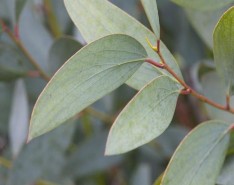
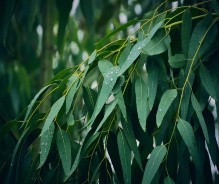
Figure 1: Eucalyptus
Classification of Eucalyptus
Scientific system used to categorize & identify Eucalyptus plant based on its botanical features. This system places Eucalyptus within broader hierarchy of plant taxonomy, helping scientists & researchers understand its biological relationships, characteristics, & evolution. Eucalyptus species are mostly native to Australia & are known for their economic, ecological, & medicinal importance. They are commonly used for timber, essential oils, & in paper production.
Table 1: Classification of eucalyptus
|
Kingdom |
Plantae |
|
Clade |
Tracheophytes |
|
Order |
Angiosperms; Eudicots; Rosids |
|
Family |
Myrtaceae |
|
Subfamily |
Myrtoideae |
|
Tribe |
Eucalyptus |
|
Genus |
Eucalyptus |
Objective of this article is to formulate & evaluation of antibacterial paper soap using eucalyptus leaves. It can vary based on the intended purpose of the soap, but it generally focuses on harnessing the benefits of eucalyptus for personal care. Here are some key objectives for incorporating eucalyptus leaves in paper soap. Eucalyptus has natural antibacterial properties, which can help cleanse the skin and prevent infections. The inclusion of eucalyptus leaves in paper soap may enhance the soap's ability to kill germs and bacteria [5,6].
Extraction procedure
Fresh Eucalyptus leaves collected then wash and grind with amount of a solution then boiled in 1hr. then filter (muslin cloth) then filter paper and need mat of extract was added by continuous stirring [7,8].
MATERIAL & METHODOLOGY
Material:
-
Material: KOH, Citric acid, distilled water, raspberry, NaCl, Coconut oil, Glycerine, sorbitol, extract, SLS.
-
Equipment’s: Paper Cutting Machin, Drying Oven, measuring cylinder, beaker, thermometer, funnel, stirrer, flask, filter paper, ice bath. [11,3]
Extraction Procedure:
Fresh Eucalyptus leaves collected then wash and grind with amount of a solution then boiled in 1hr. then filter (muslin cloth) then filter paper and need mat of extract was added by continuous stirring. [14]
PROCEDURE:
The steps below explain the procedure involved: [11]
-
Prepare glycerin
Measure of glycerin (6ml) Then heat on 60 0C

-
Prepare coconut oil and castor oil mix
Weigh10 ml coconut oil gentle heat, then add 2ml of castor oil. mixed by continuous stirring.

-
Prepare KOH Solution
60 ml water add in 3 gm of KOH stir using stirrer then keep covered.

-
Mix soap
-
-
KOH pour into glycerin then heat and maintain 60 – 70 0C stir continue and heat for 2 -3 hr.
-
Then 3.2gm Nalco solution added with stirring, heat until saponification then cools in ice bath for 10 – 15min then filter.
-
Add nail Jacinto the flask cooled Then mixed in SLS in solution and stir.
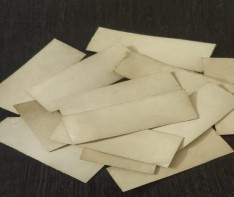
Figure 2: Paper soap
FORMULATION:
Table 1 depicts the ingredient used as per their respective measures below:
Table 1: Ingredient used & their measures
|
Sr no |
Ingredient |
gm/ml |
|---|---|---|
|
1 |
KoH |
3gm |
|
2 |
Glycerine |
6ml |
|
3 |
Coconut oil |
10ml |
|
4 |
Raspberry |
3ml |
|
5 |
NaCl |
3.2ml |
|
6 |
Citric acid |
2ml |
|
7 |
Distilled water |
60ml |
|
8 |
sorbitol |
0:4 |
|
9 |
extract |
14.4ml |
|
10 |
Sodium Lauryl Sulphate |
10 gm |
Following steps depicts using soap sheets effectively.
3 Simple Steps
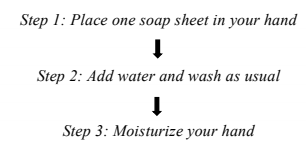
Step 1: Place one soap sheet in your hand: Take single, ultra-thin soap sheet & place it on your palm. These sheets are compact, easy to carry, & dissolve quickly when wet.
Step 2: Add water and wash as usual: Add small amount of water to your hands. Soap sheet will instantly dissolve & lather up, allowing you to wash your hands thoroughly just like with liquid or bar soap.
Step 3: Moisturize your hand: After rinsing & drying your hands, apply moisturizer to keep your skin soft & hydrated especially important after frequent handwashing.
EVALUATION TEST FOR PAPER SOAP:
pH: pH of paper soap solution was measured using pH meter. Required pH (9-10) was adjusted by 0.1N KOH solution.
Foam height: 0.5gm of sample of soap solution was taken, dispersed in 25ml distilled water then, transferred it into 100ml measuring cylinder; volume was make-up to 50ml with water. Then the cylinder was shaken 5 times until the foam is produced. The cylinder was allowed to stand till aqueous volume measured up to 50ml and measured the foam height, above the aqueous volume.
Sensitivity test: It is done by “patch test”. Apply product on 1cm patch of chicken skin, if no inflammation or rashes then it is considered as free from sensitivity.
Foam stability test: Foam stability is the consistency of the amount of foam produces by paper soap. The resulting foam on paper soap is smoother than the regular soap. The foam is stable in the presence of glycerin & glycerin do not have any significant effect on foam stability.
Paper spread-ability: A pinch of product should be easily spreadable on paper.
Stability test: Stability study was carried out for the formulation by providing different temperatures. I.e., at room temperature 37 degree Celsius and refrigerator 2-8 Celsius. Sample
was checked on different time interval and analyzed for visual appearance, pH etc.
Antibacterial Test: There was study conducted on antibacterial activity of paper soap. Microbial study was done using microorganisms. For checking the effectiveness of the paper soap uses the bacterial was grown in the culture media the soap strip was placed in the surface of the agar media then it was placed in the incubator for about 24 hrs at 30 c The herb diffuses out of the strip into the agar the bacterial activity was recorded. Sr. No Parameter Observation. [7,11]
CHEMICAL TEST
-
pH Test
-
Purpose: To determine the acidity or alkalinity of the soap.
-
Method: A pH meter or pH indicator paper is used to measure the pH of the soap solution when dissolved in water. Ideally, soap should have a slightly alkaline pH, around 9-10, for effective cleaning and skin safety.
-
-
Saponification Value (SV).
-
Purpose: To determine the amount of alkali required to convert a given quantity of fat or oil into soap.
-
Method: The test involves mixing the eucalyptus soap base with an excess of potassium hydroxide (KOH) and heating the mixture. The amount of alkali used to saponify the soap is then determined, which gives insight into the soap's purity and quality.
-
-
Stability Test (Oxidation Test)
-
Purpose: To determine how stable the soap is over time, particularly with respect to the degradation of the eucalyptus oil.
-
Method: The soap is stored under different conditions (e.g., temperature, light, humidity) for a set period, and then the chemical composition is reanalysed to check for any breakdown or oxidation of the eucalyptus soap.
-
-
Microbial Testing
-
Purpose: To ensure that the soap is free from harmful microbial contamination.
-
Method: Standard microbiological tests (such as the Total Plate Count, Coliform Count, and Pathogen Testing) are performed to ensure the soap is safe for use. This is particularly important for hygiene products like soap.
-
-
Solubility Test
-
Purpose: To test the solubility of the paper soap in water.
-
Method: The paper soap is submerged in water, and its ability to dissolve is observed. A good-quality paper soap should dissolve efficiently when exposed to water. [11]
SCIENTIFIC CLASSIFICATION
Table 3 shows the scientific classification along with the parameters & observations respectively;
Table 2: Scientific classification
Sr.no
Parameter
Observation
1
Colour
White colour
2
Odour
Characteristics and Pleasant
3
Texture
Smooth
4
PH
7.1
5
High
3.5cm
6
Foam retention
3min
7
Sensitivity
No rashes
8
Irritation
Non irritation
Advantages: The advantages include the following properties mentioned below; [7,8]
-
Light weight
-
Ready to use
-
Gentle on skin
-
Ease of carrying
-
Earth friendly
-
Low cost
-
Biodegradable
-
Compostable
-
-
RESULT
Eucalyptus leaves were included in formulation & evaluation of antibacterial paper soap. They were carefully selected & incorporated into formulation of antibacterial paper soap due to their well-known antimicrobial properties. Their inclusion played vital role in enhancing soap’s effectiveness against harmful bacteria, making it both natural & functional component of final product.
DISCUSSION
integration of eucalyptus leaf extract into paper soap formulations has been shown to enhance the soap's ability to inhibit bacterial growth. Research indicates that essential oils from eucalyptus leaves possess antimicrobial properties effective against both Gram-negative ( E. ) and Gram-positive ( S. aureus ) bacteria. This suggests that eucalyptus-infused paper soap can serve as an effective tool in reducing the risk of bacterial skin infections. [12]
CONCLUSION
Eucalyptus paper soap is an innovative product that combines the benefits of eucalyptus essential oil with the convenience of paper soap. It offers a unique and portable solution for hygiene, providing cleansing properties while delivering the refreshing and soothing scent of eucalyptus. Eucalyptus paper soap is an effective, eco-friendly, and convenient option for those seeking on-the-go cleanliness. The inclusion of eucalyptus oil adds an extra layer of benefits, such as antibacterial and calming properties, making it a great choice for travellers, outdoor enthusiasts, or anyone looking to maintain personal hygiene with minimal fuss. Its compact design, ease of use, and refreshing scent make it a practical and versatile product for modern
life. However, like all products, it's important to ensure the quality and sourcing of the ingredients to maximize the benefits of both the soap and the eucalyptus oil. Eucalyptus paper soap stands out as a modern solution for personal hygiene, combining the practical advantages of paper soap with the therapeutic benefits of eucalyptus essential oil. The lightweight, compact design of paper soap makes it incredibly portable, offering users the ability to maintain cleanliness while traveling, camping, or during everyday life. This product can easily be carried in a pocket, purse, or travel bag, making it an ideal companion for those who want to stay fresh while on the move. [9,10]
REFERENCES
-
Dr Sarasvati, Dr Katha PN, Mahalakhsmi Sampagavi, et al, “formation and evaluation of herbal Paper soap”, International Journal of Pharmaceutical Sciences and Drug Analysis,1(2)2021.
-
Kuril M, et al, “formulation and evaluation of polyhedral paper soap”, Journal of Innovation and Invention in Pharmaceutical Sciences,1(1):2020,54-57.
-
C. K. Kolkata, Rd. A. S. Goshala, prof. S. B. Goshala, Cultivation of Medicinal Plants, Publication-Nibali Prakash an, edition- April 2019.
-
Mondale S, Kolhapur SA. Evaluation of the antimicrobial efficacy and safety of Pure Hands Herbal Hand sanitizer in hand hygiene and on Inanimate the Antiseptic2004;101(2): 55-57.
-
Gupta A.K., Ganjewala D. A study on biosynthesis of “central” in lemongrass (Cymbopogon flexuous) cv. Sauna. Act Physiol. 2015; 37:240. Doe: 10.1007/s11738- 015-1989-2. [Crossruff] [Google Scholar]
-
Souwalak P, Ndonga P, Saccharin R, Metta O. Antifungal activity from leaf extracts of Cassia Alatza Cassia fistula, and Cassia tore L. Journal of Science and Technology2004; 26(5):741-748.
-
Muhammad Iftikhar Ahmad, Nadir Ali, Farah Faros, et al, “phytochemical and pharmacological profile of Eucalyptus globules,” Global Scientism journals, 9(5),2021.
-
Angela E. Salon, et al “Immune modifying and antimicrobial effects of Eucalyptus oil and Simple Inhalation devices”, Alternative Medicine Review: A Journal of Clinical Therapeutic,15(1):2010,33- 47.
-
Vidin Keshawn, Shawshank Gupta, Nikhil Kushwaha, Roti Kesharwani et al, “A review on the therapeutics application of eucalyptus oil” International Journal of Herbal Medicine,6(6):2018,110- 115.
-
Ending Supraptiah, et al, “Utilization of green betel leaves extract as an additive material on paper soap production”, Atlantis highlights in Engineering,9, 2021,431-436.
-
Joshi MG, et al. Evaluation of herbal hand wash formulation; 2008. Available: https:// www.researchgate.net/p bilocation/290287696_Evaluation_of_herbal_hand wash formulation.
-
Kapoor, V. P. (2005). Herbal cosmetics for skin and hair care.4(4). 306-315
-
Timothy SY, Swazis CH, Amati RG, Masala ID. Antifungal activity of aqueous and ethanoic leaf extracts of Cassia balata Linn. Journal of Applied Pharmaceutical Science. 2012 Jul 30;2(7):182-5.
-
Verme RK, Kumara P, Maura RK, Kumar V, Verme RB, Singh RK. Medicinal properties of turmeric (Curcuma longa L.): A review. Int. J. Chem. Stud. 2018;6(4):1354-7.